THIS TOOLKIT IS PROVIDED BY RECYCLE, MICHIGAN—AN EDUCATION AND OUTREACH INITIATIVE OF THE MICHIGAN RECYCLING COALITION
SOCIAL MEDIA
HOW TO USE THIS PAGE
Everything on this page is free for you to use. You can change anything you'd like to about these posts - add your logo, and be sure to add your information in the blank spaces before posting!

Customizing Your Post

You can usually get to it by simply clicking the "download" icon in your browser:
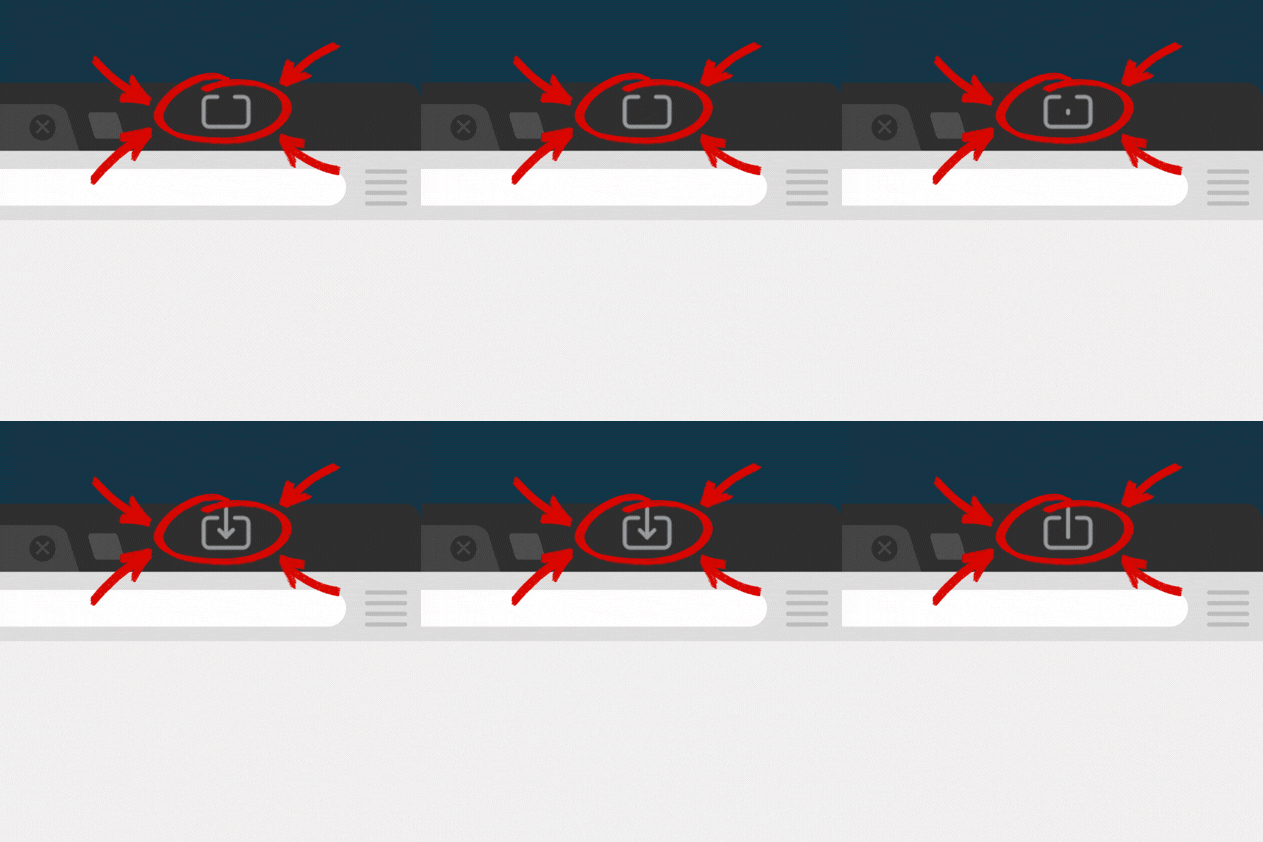
But you may also locate it in your "downloads" file.

Create a new post on the social media platform of your choice. Paste the copied text and add the downloaded image. Fill in any blank text and update with any information specific to your program that you'd like to include.
CURBSIDE
CURBSIDE
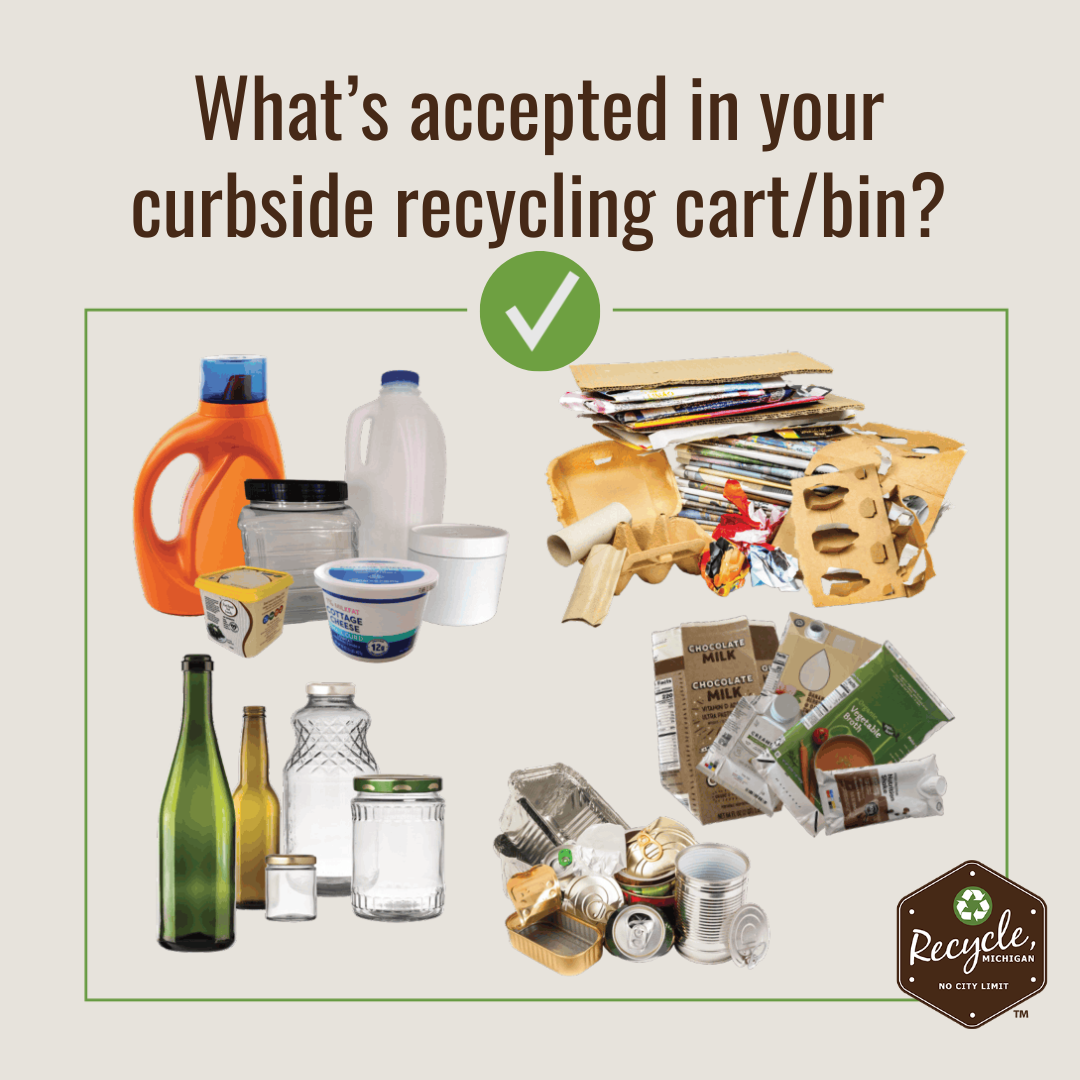
What’s accepted in your curbside recycling cart or bin? 🤔
✅ Metal/aluminum cans, mixed paper, flattened cardboard, and plastic containers are all eligible for curbside recycling.
✅ Make sure your recyclables are empty, clean, and dry before going in your curbside cart or bin.
Visit ___ for extra recycling tips & info.
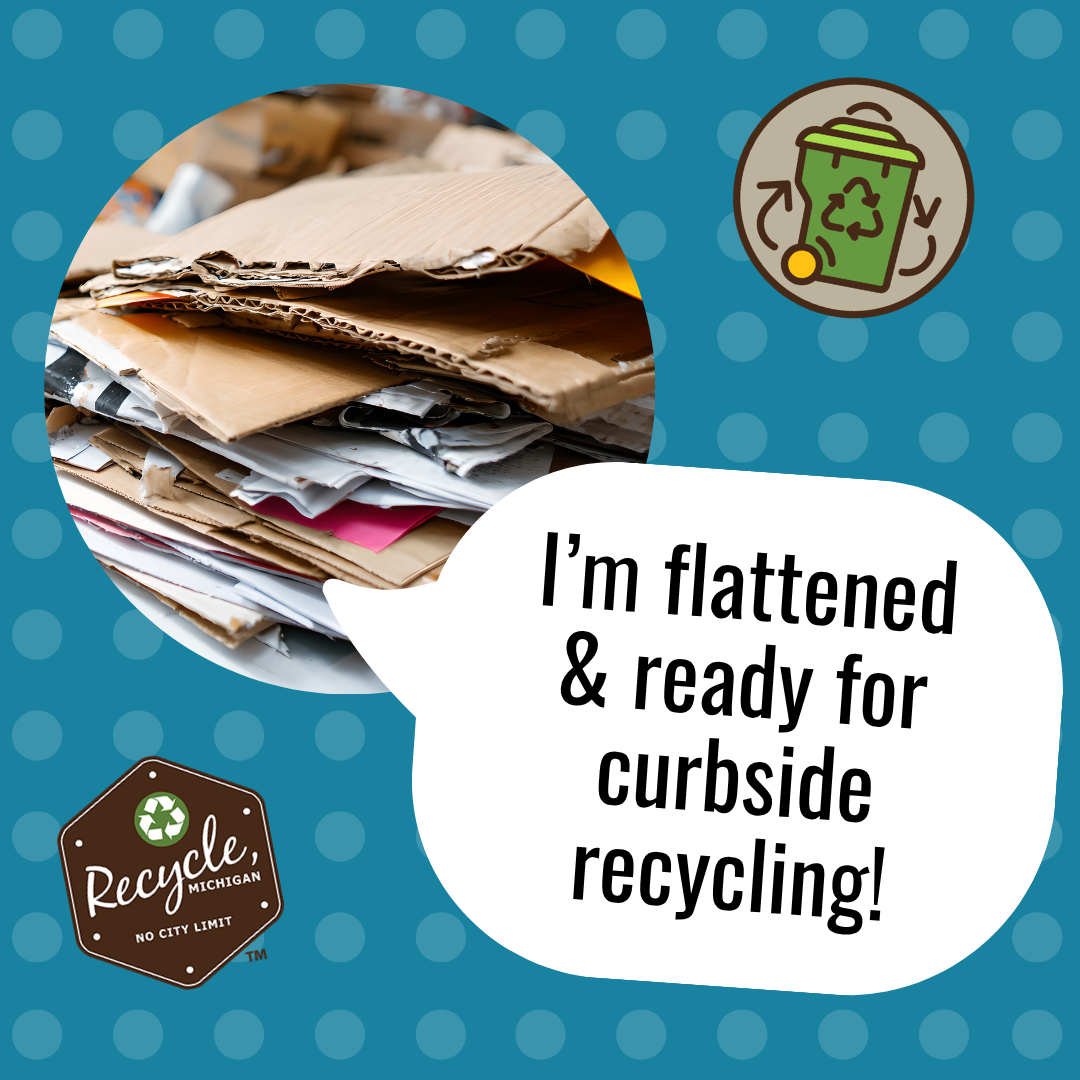
Flatten your cardboard boxes before placing them in your curbside recycling cart or bin.
✅ When cardboard is flat, it saves space in the recycling container. Additionally, it ensures workers that there is no packaging inside.
✅ During recycling, cardboard is shredded, moistened into a pulp, and reformed into new products like brand new boxes.
Visit ___ for extra recycling tips & info.
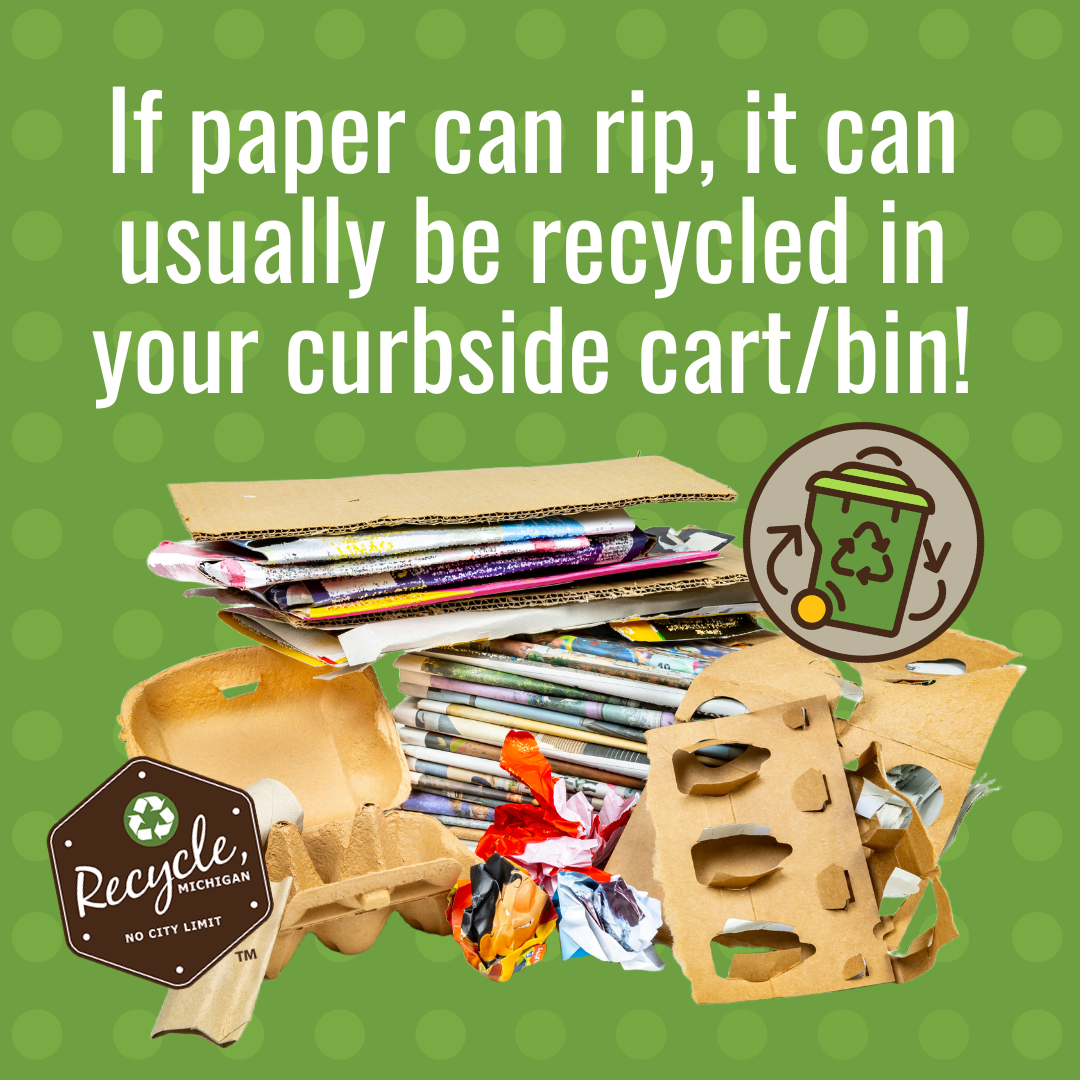
When recycling paper, a good rule of thumb to remember is: “If it can rip, it can go in your curbside cart or bin!”
✅ Eligible items include: junk mail, glossy magazines, paperback books, newspapers, paper egg cartons, packing paper, cereal boxes, and paper beverage carriers.
✅ Cards and wrapping can be recycled, as long as they don’t have glitter or metallic inks/embossing.
❌ Don’t recycle the following types of paper: metallic/glittery paper, paper with leftover food, loose paper shreds, or laminated/photo paper.
Visit ___ for extra recycling tips & info.
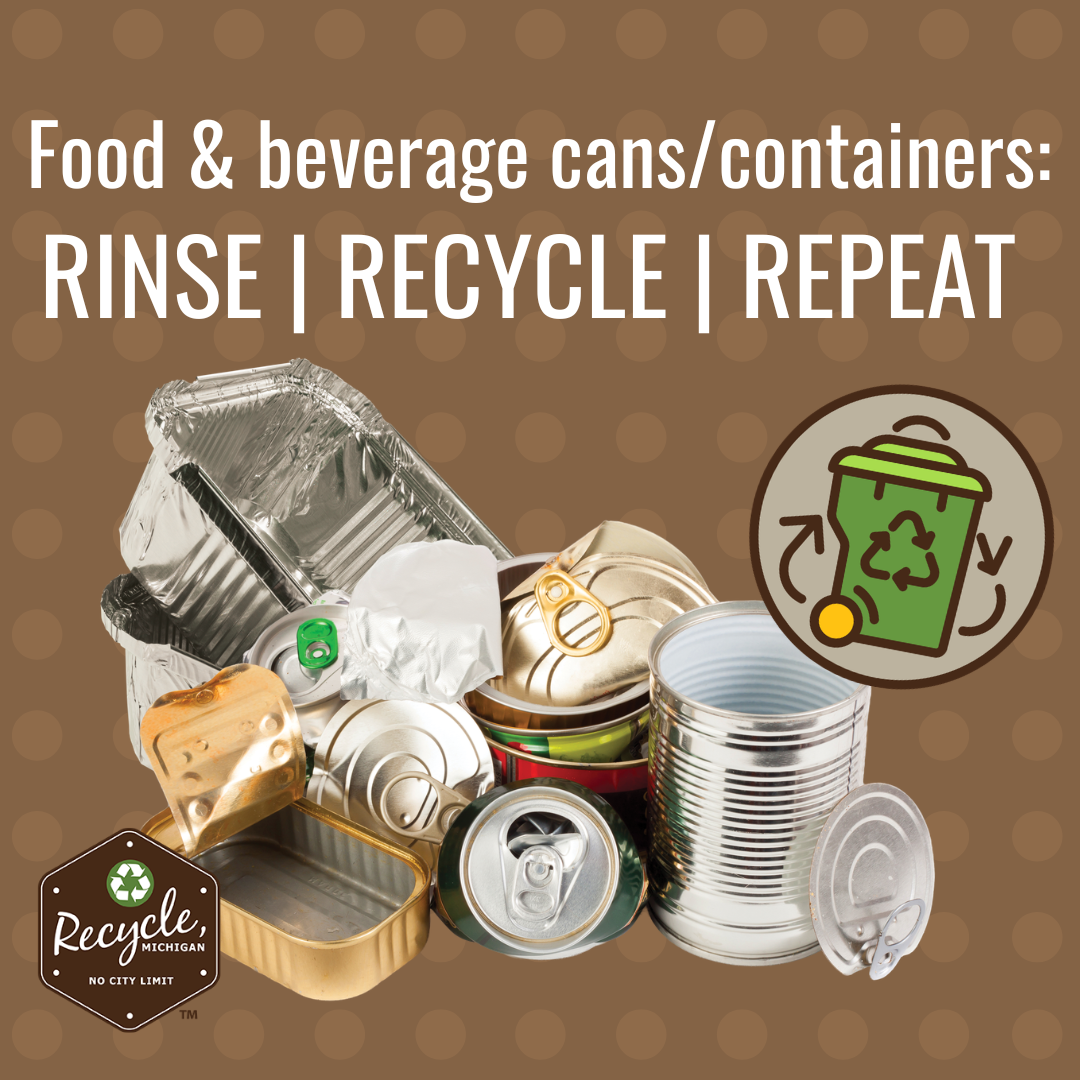
Recycling your cans is easy. Just rinse & toss them in your curbside recycling cart or bin.
✅ Rinse out any leftover food from steel cans, such as those that hold soup or vegetables, before recycling.
✅ Same goes with aluminum beverage cans - a quick rinse to remove sticky liquids is all it takes. Then, place them in your recycling cart or bin or return them to the store for deposit.
Visit ___ for extra recycling tips & info.
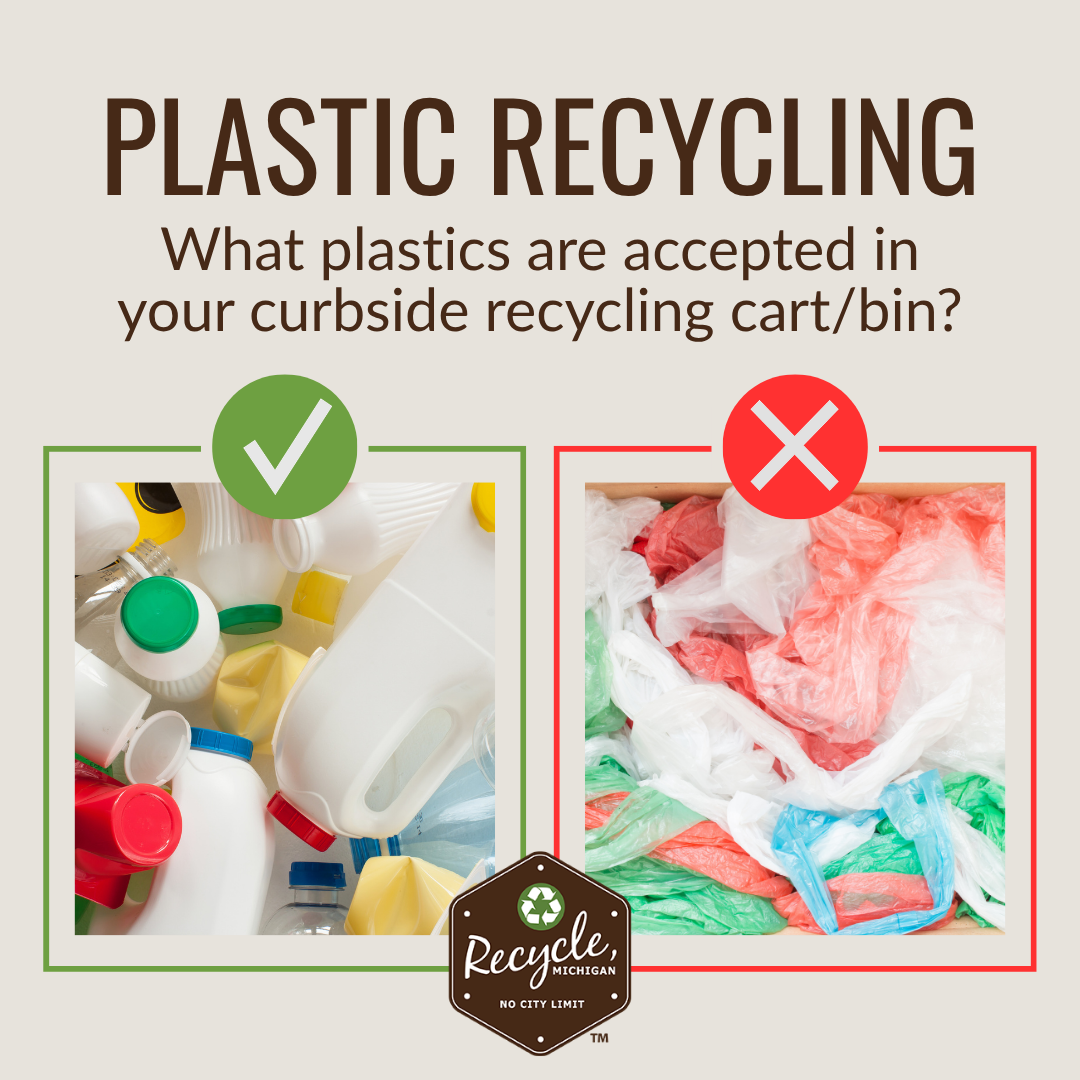
✅ Plastic bottles, jugs, and containers for food, beverages, and soap are typically recyclable in your curbside recycling cart or bin.
✅ A quick rinse to remove sticky liquids or foods is all you need to do to recycle plastic containers.
❌ Never put plastic bags or plastic film in your curbside recycling cart or bin. Instead, check to see if a grocery store near you offers receptacles for plastic film recycling.
Visit ___ for extra recycling tips & info.
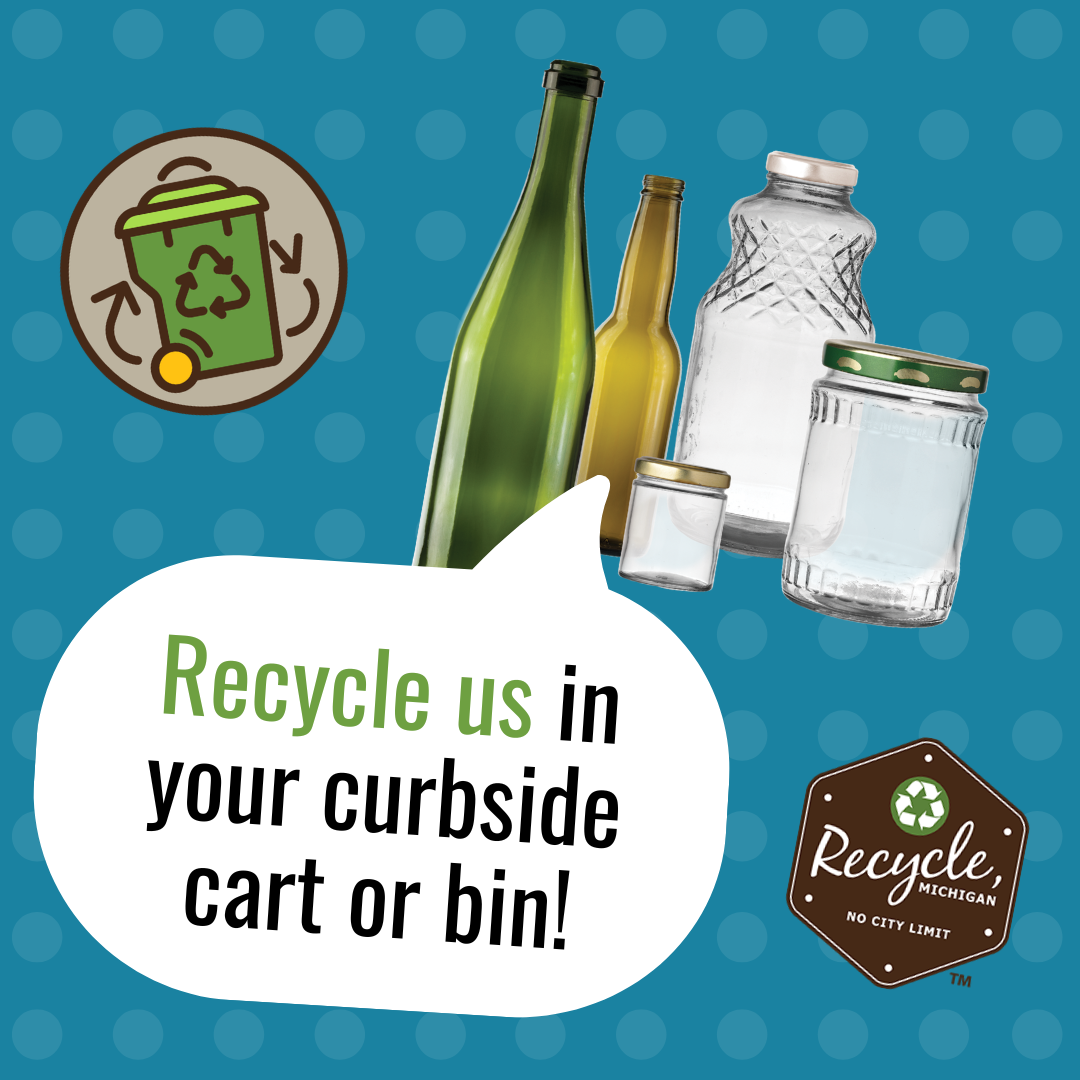
Glass containers for food and beverages are accepted for curbside recycling!
✅ All colors of glass bottles and jars can be recycled, including clear, brown, green, and amber.
✅ Alternatively, certain glass bottles fall under Michigan’s deposit return system. You can get a 10¢ deposit on returned single-serve carbonated beverage bottles such as beer, soft drinks, and carbonated & mineral water. This doesn’t apply to wine bottles or spirits.
❌ Other types of glass, like windows, ceramics, or mirrors, can’t be recycled in your curbside cart or bin.
Visit ___ for extra recycling tips & info.
CONTAMINATION
CONTAMINATION
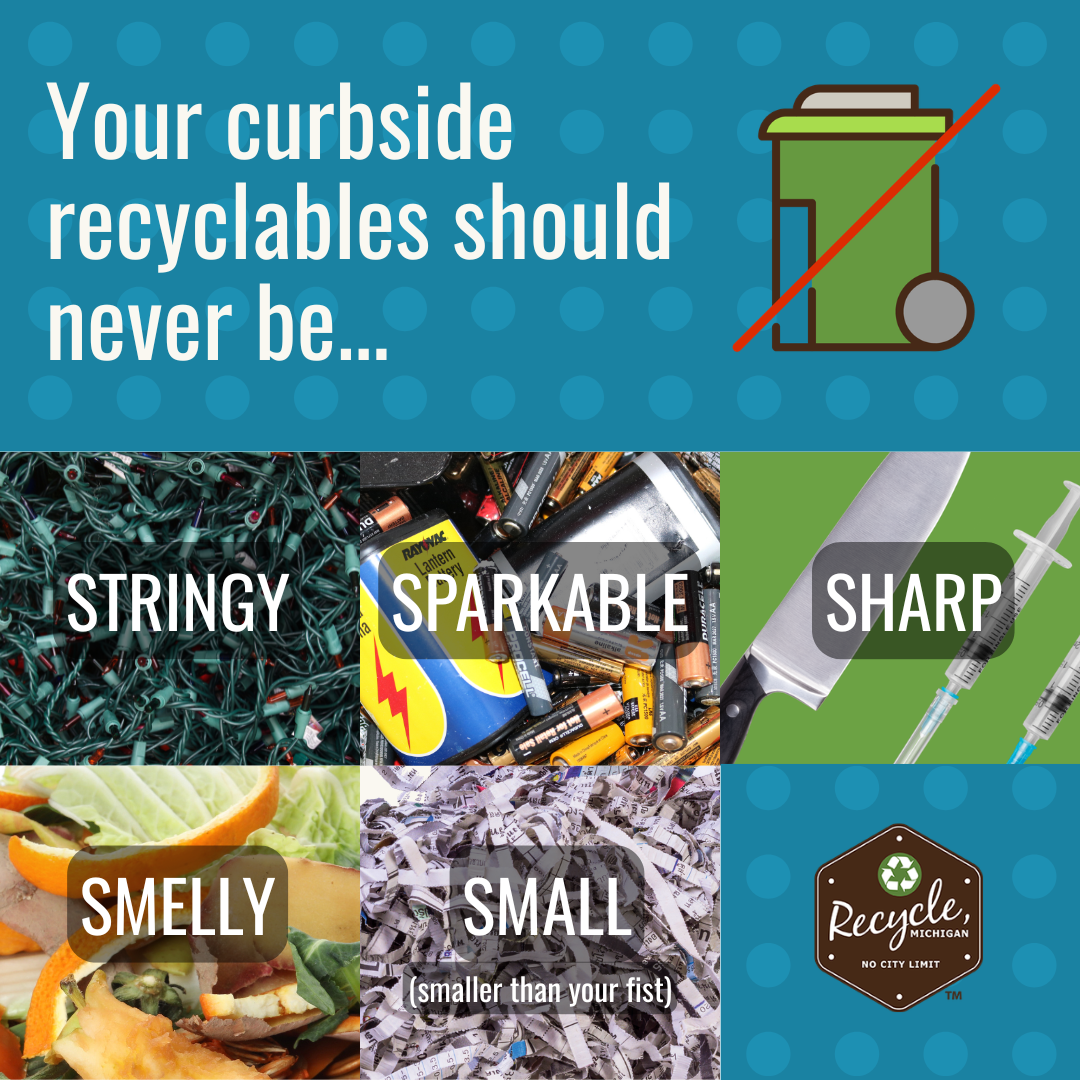
When deciding which items can go in your curbside cart or bin, avoid these 5 troublemakers – things that are stringy, sparkable, sharp, smelly, or too small.
❌ That means that things like string lights, plastic bags, batteries, needles, food waste, and loose bottle caps should never be placed in your curbside recycling cart or bin.
✅ Always follow local recycling guidelines. To prevent safety issues, items like batteries and needles should be dropped off at a community event or takeback program.
Visit ____ complete info about what you can and cannot recycle at the curb.
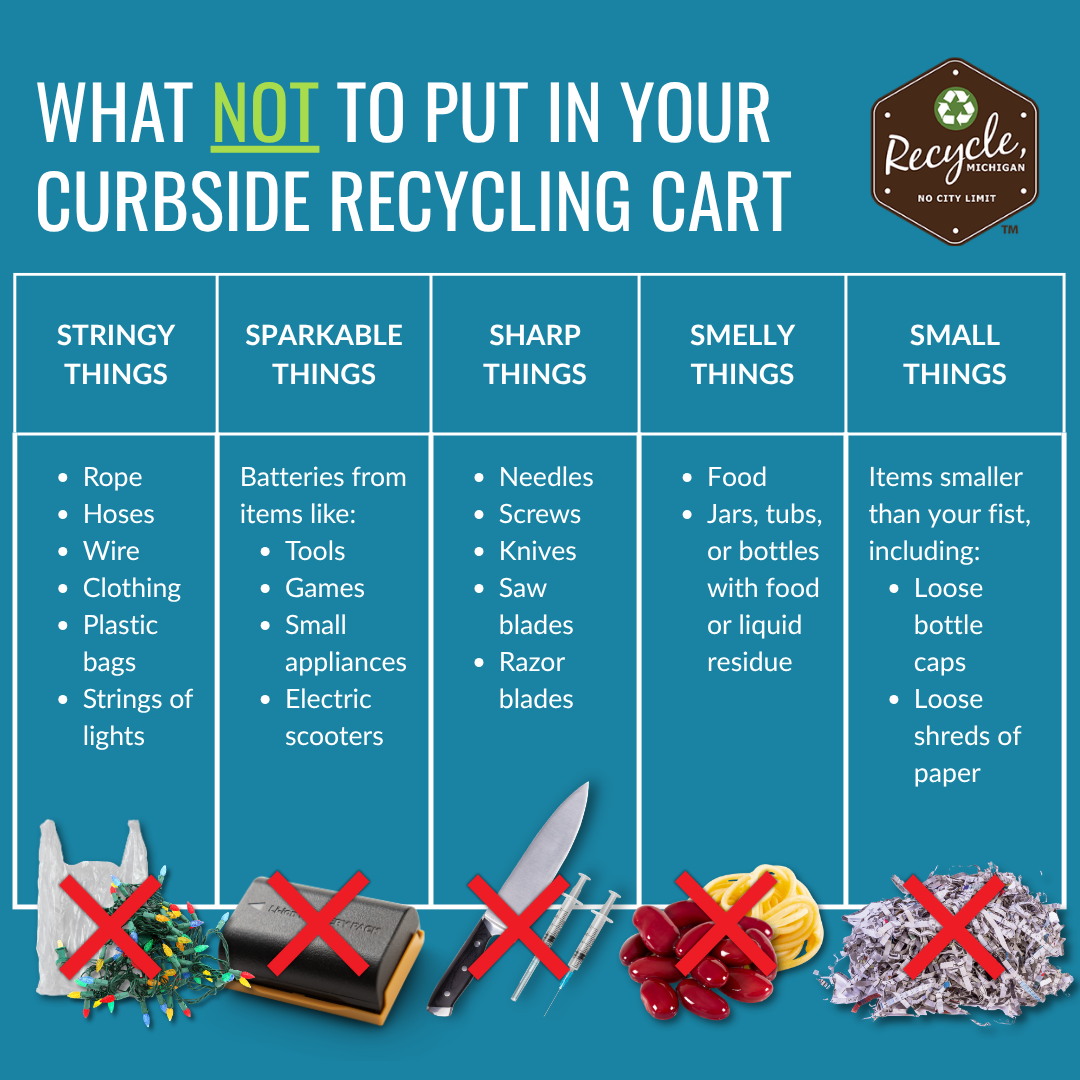
What things do NOT go in your curbside recycling cart or bin? 🤔
❌ As a rule of thumb, never put things that are stringy, sparkable, sharp, smelly, or smaller than your fist in your cart/bin.
✅ Only put things in your recycling cart/bin that are listed as accepted for recycling. Visit ____ for complete info about what you can and cannot recycle at the curb.
ORGANICS
ORGANICS
Do you live in __? Compost your food scraps at ____!
Collect kitchen scraps - fruit and vegetable scraps, coffee grounds, egg shells, and other kitchen organics in a sealed container on or under the kitchen counter.
After you drop these materials off, they’ll be composted into a beneficial soil amendment.
Do NOT include produce stickers, pet/human waste, plastic, or sawdust from treated wood in your food scraps drop-off material.
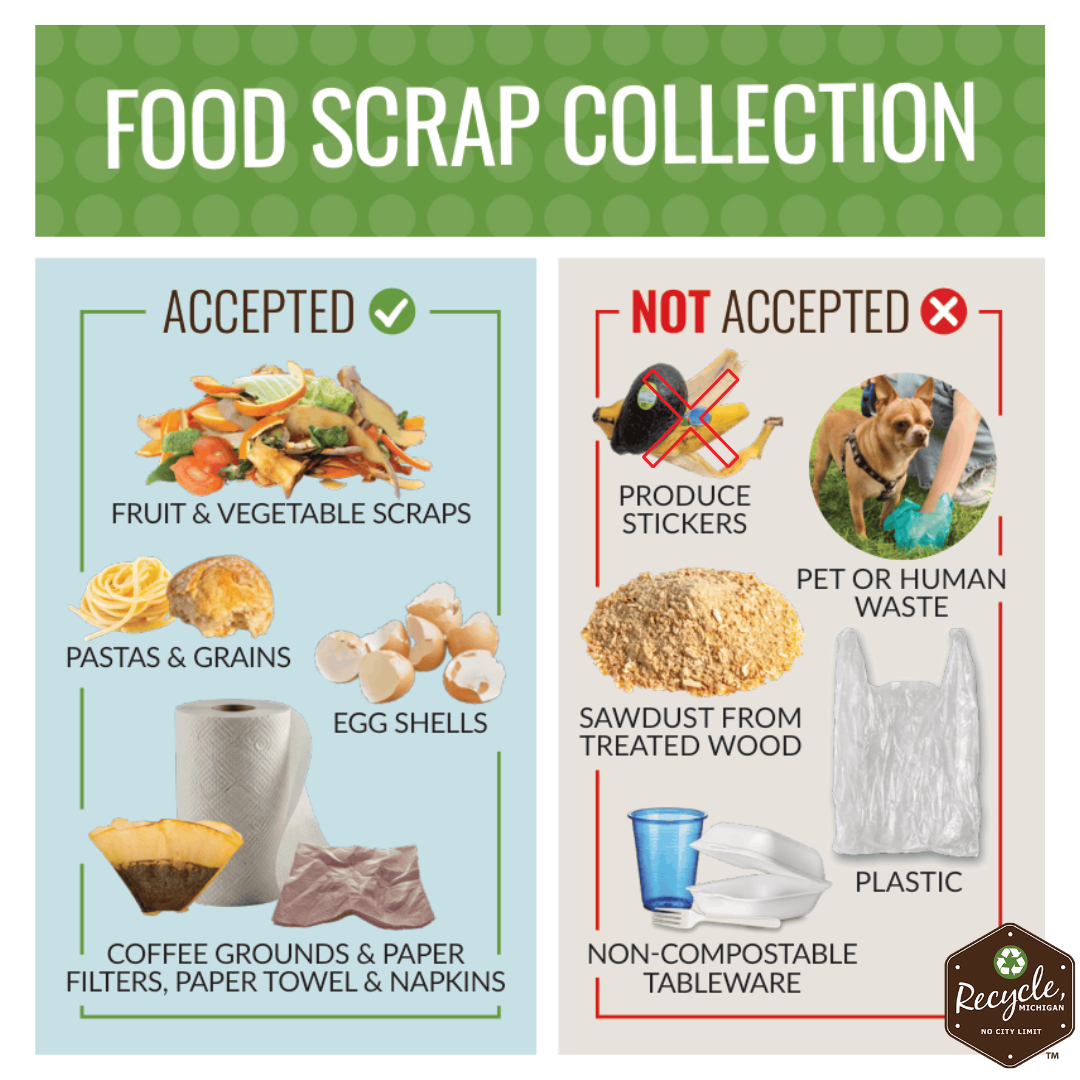
Visit ____ for complete instructions, tips, and food scraps drop-off locations.
Ready to divert your food scraps from the landfill? Before you drop your food scraps at ____, make sure to follow these guidelines.
✅ All food scraps are accepted at the food scraps drop-off site. Coffee grounds, paper filters, paper towels, and napkins are also accepted.
❌ Do not include treated wood and sawdust which can be toxic to soils or plastic and produce stickers which do not properly break down in compost.
Visit ____ complete instructions, tips, and food scraps drop-off locations.
SPECIAL MATERIALS
FOAM
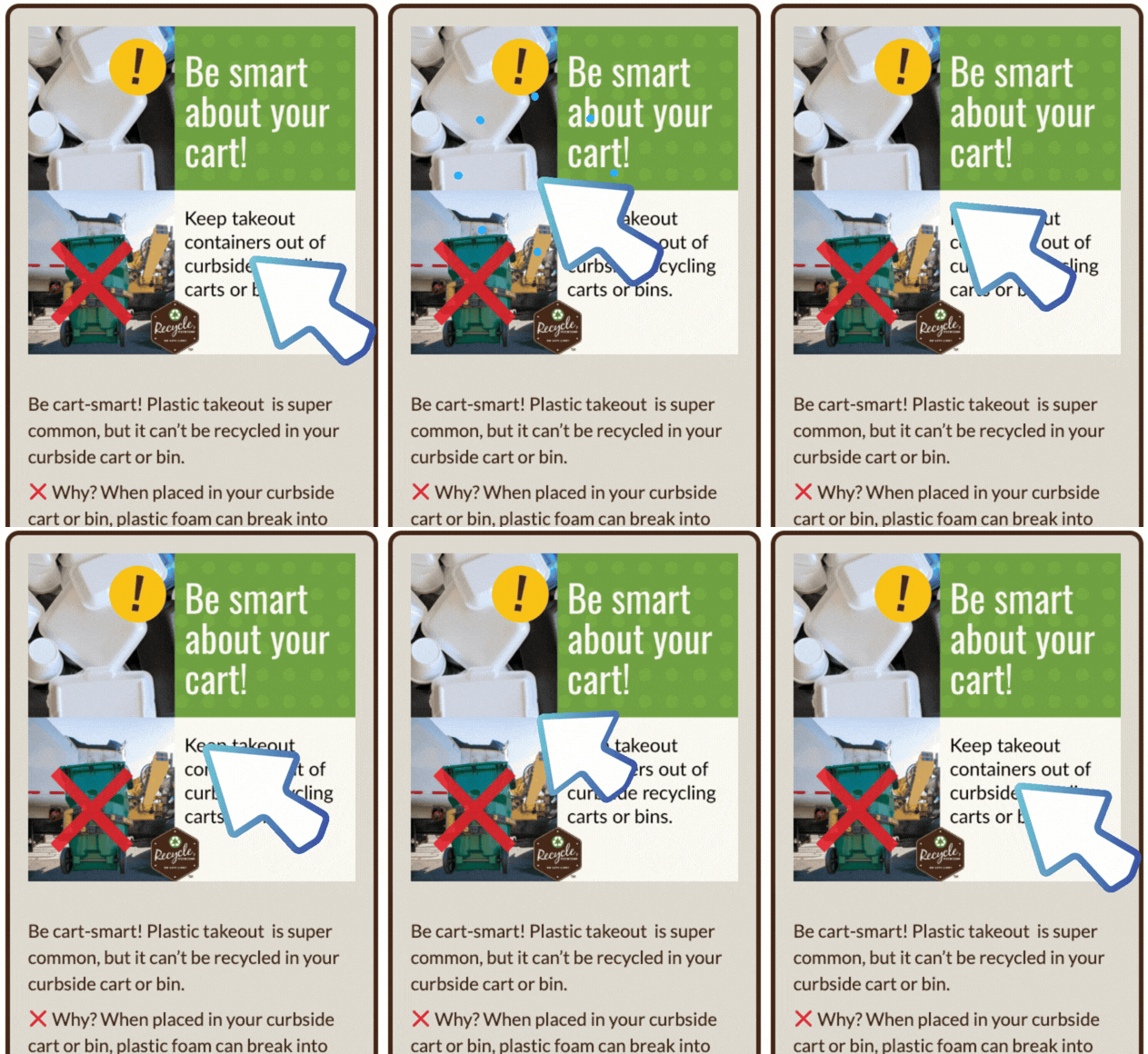
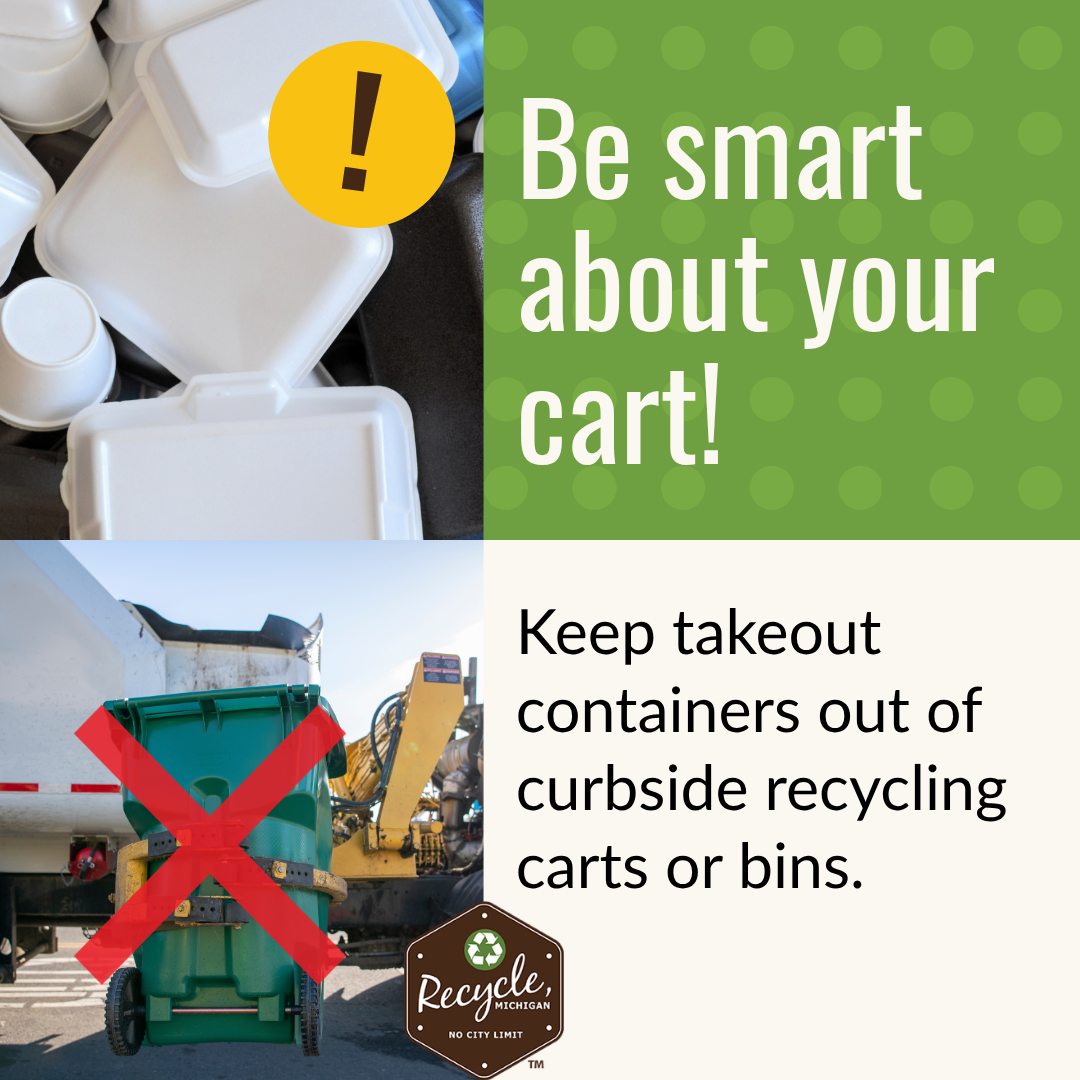
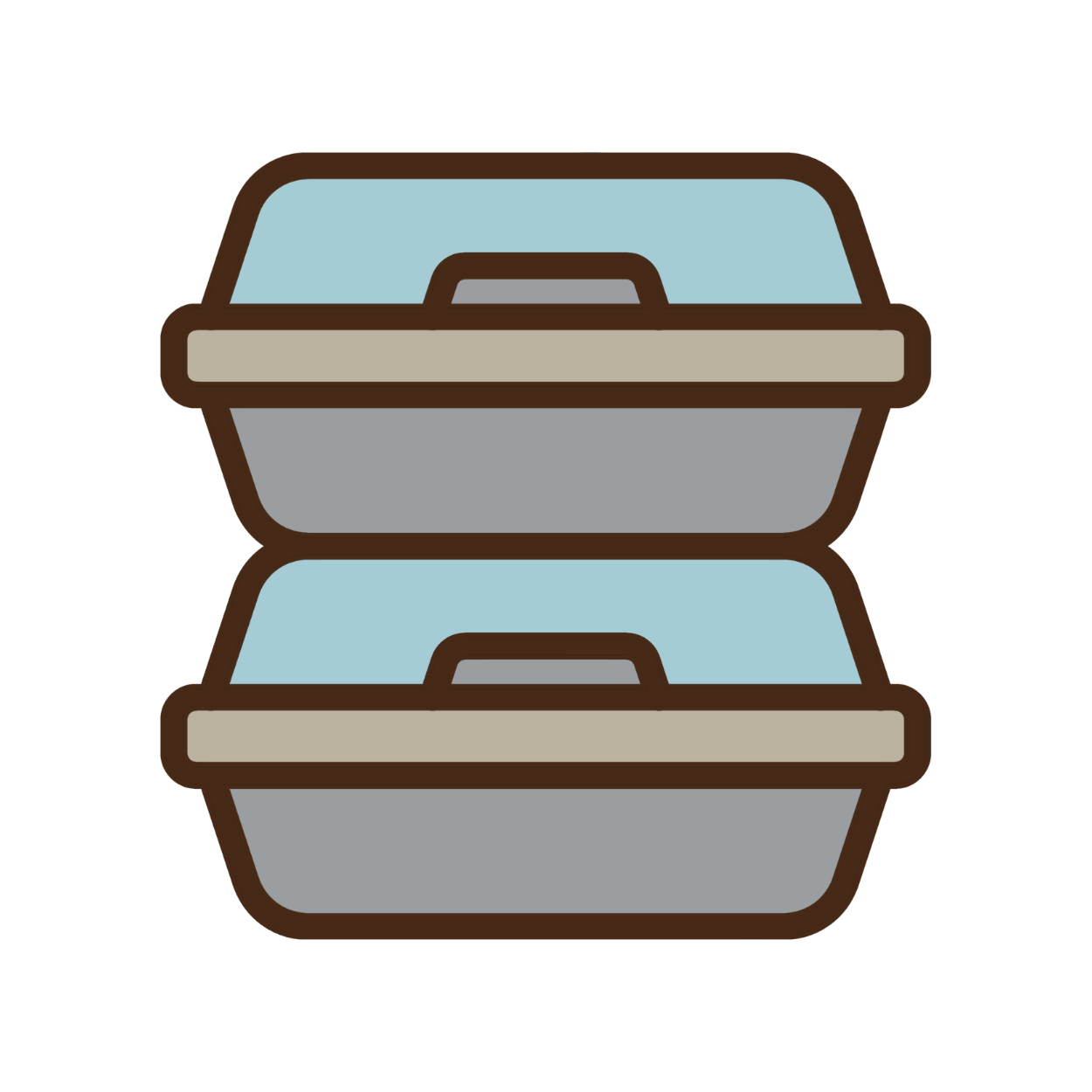
Be cart-smart! Plastic takeout is super common, but it can’t be recycled in your curbside cart or bin.
❌ Why? When placed in your curbside cart or bin, plastic foam can break into tiny pieces, blow away during transport, and end up as litter.
✅ Instead, store plastic foam separate from your curbside recyclables. Then, take it to a recycling center, community event, or other location that accepts the material.
Click the link in our bio to find drop-off locations for plastic foam near you!
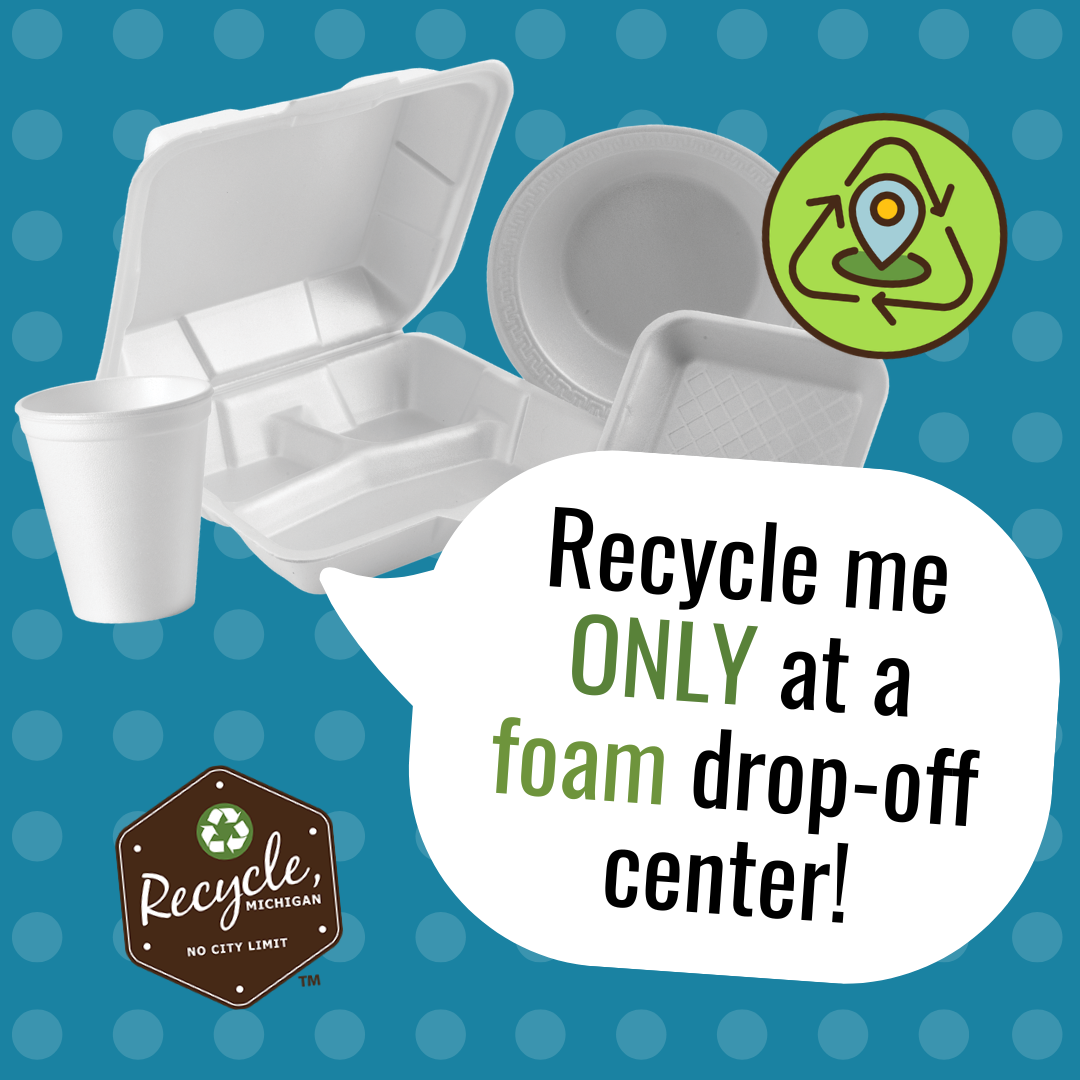
Plastic foam products like takeout containers and packing peanuts don’t belong in your curbside cart! These items, along with other plastic foam products, require special processing.
Luckily, dozens of drop-off sites for this material can be found across the state. Visit the website in our bio and click “Find Plastic Foam Drop-Off Sites” to get started!

Plastic foam CAN be recycled, but NOT in your curbside cart or bin!
When plastic foam is recycled properly, it can be manufactured into new foam products like plates, cups, and even construction materials.
Store plastic foam separate from your curbside recyclables, and take it to a designated drop-off center. These facilities send plastic foam to manufacturers who transform it into new foam products like plates, cups, and even construction materials.
Don’t know where to take your plastic foam? Visit the website in our bio and click “Find Plastic Foam Drop-Off Sites” to get started!
STRING LIGHTS
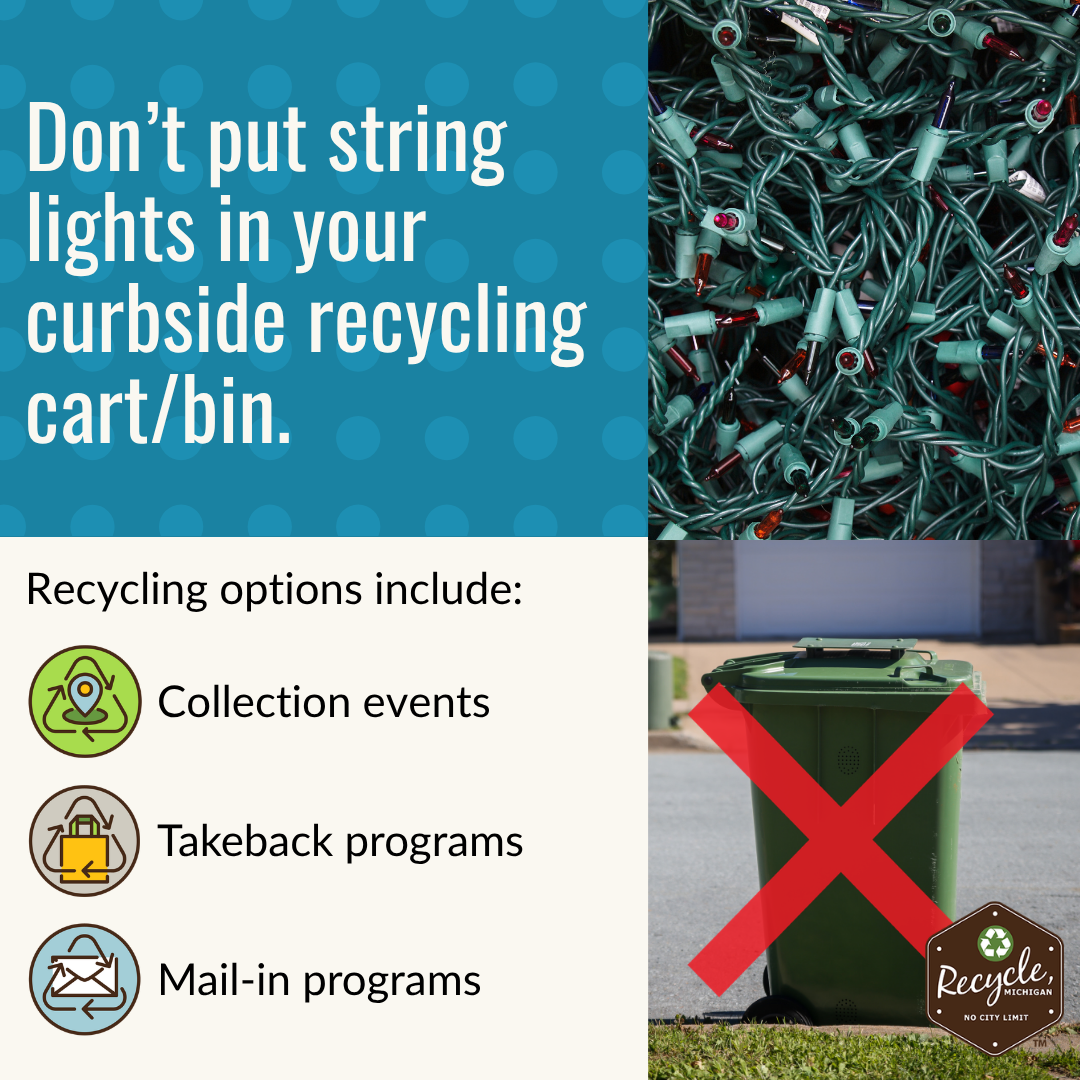
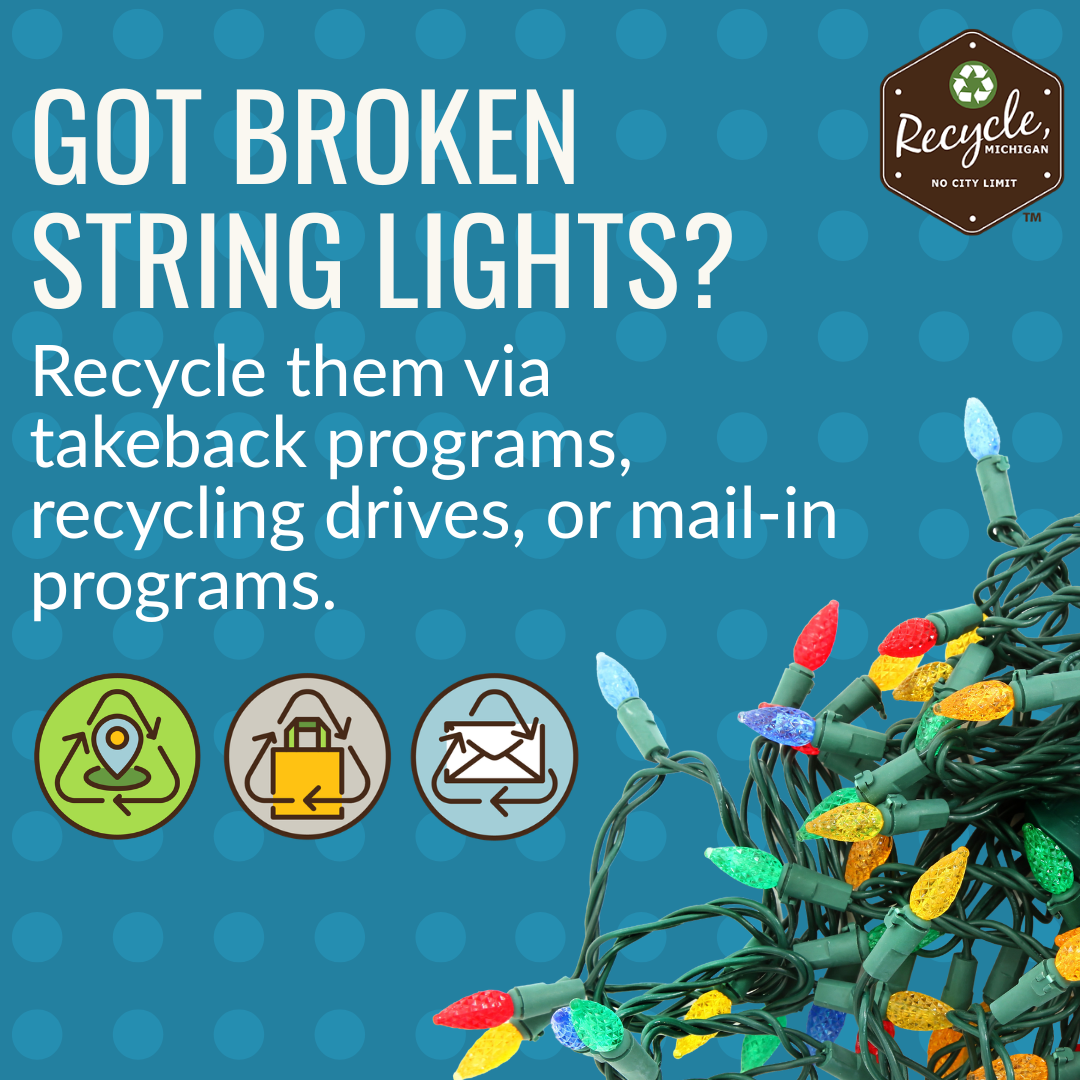
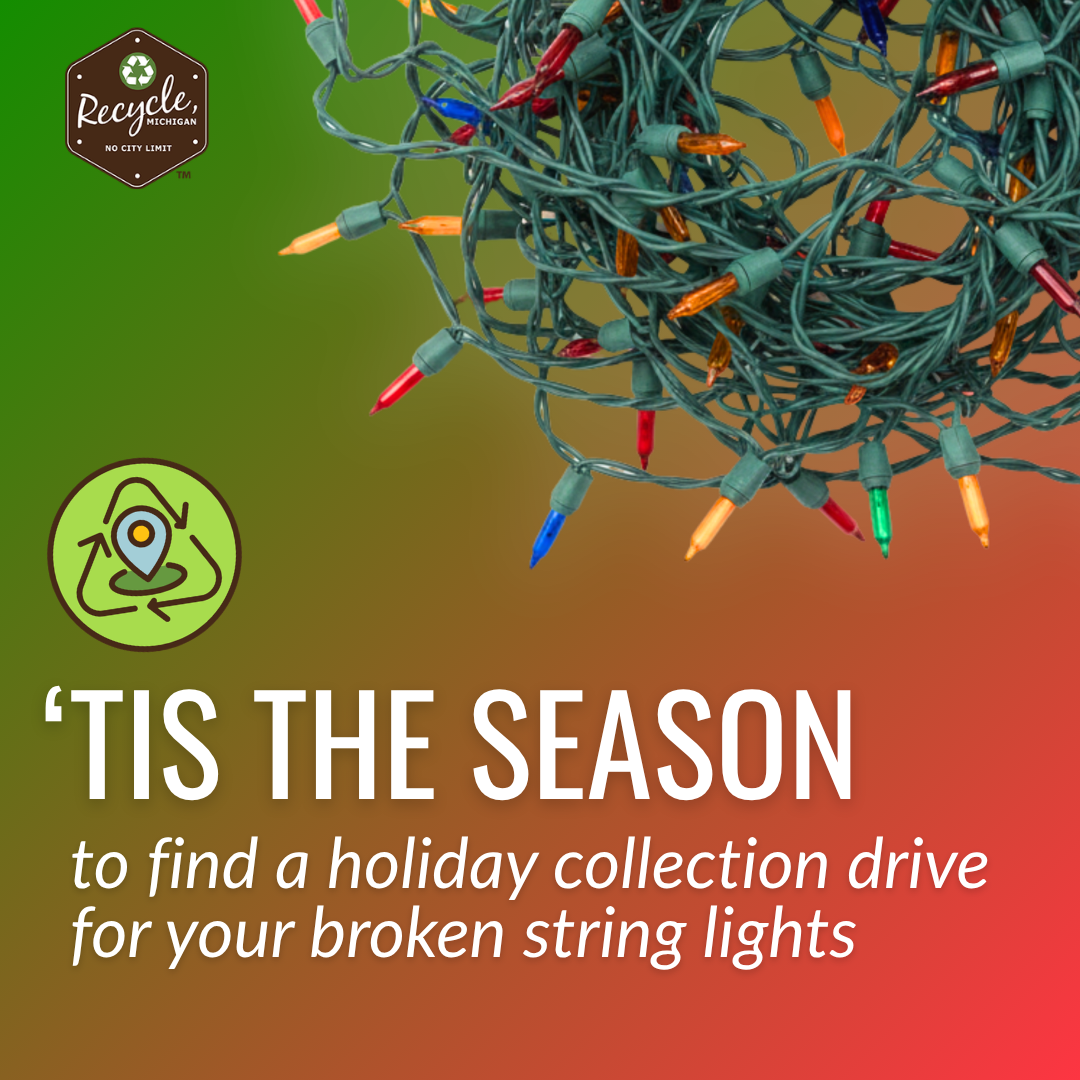
Broken string lights CAN be recycled, but NOT in your curbside recycling cart or bin!
❌ Why? String lights can tangle and jam machinery at the recycling facility. When this occurs, staff must shut down equipment and manually cut them out, increasing safety risks to workers.
✅ Luckily, Michigan residents have multiple convenient options for recycling string lights, especially during the winter holiday season.
Visit_______________ to find more information about shrink wrap recycling near you.
Did you pull out your Christmas lights this year only to find burnt out light bulbs? They can be recycled, but NOT in your curbside recycling cart or bin.
Instead, do one of the following:
Take string lights to a retailer that offers takeback programs.
Participate in a community seasonal holiday light recycling drive, if available.
Send your string lights to be recycled via mail-in programs.
Visit_______________ to find more information about shrink wrap recycling near you.
This holiday season, check “recycle old holiday lights” off of your to-do list!
String lights need special processing to be recycled, so DON’T put them in your curbside recycling cart or bin. String lights contain valuable copper wiring that is recoverable when properly recycled through drop-off or mail-in programs.
Visit_______________ to find more information about shrink wrap recycling near you.
HOUSEHOLD HAZARDOUS WASTE
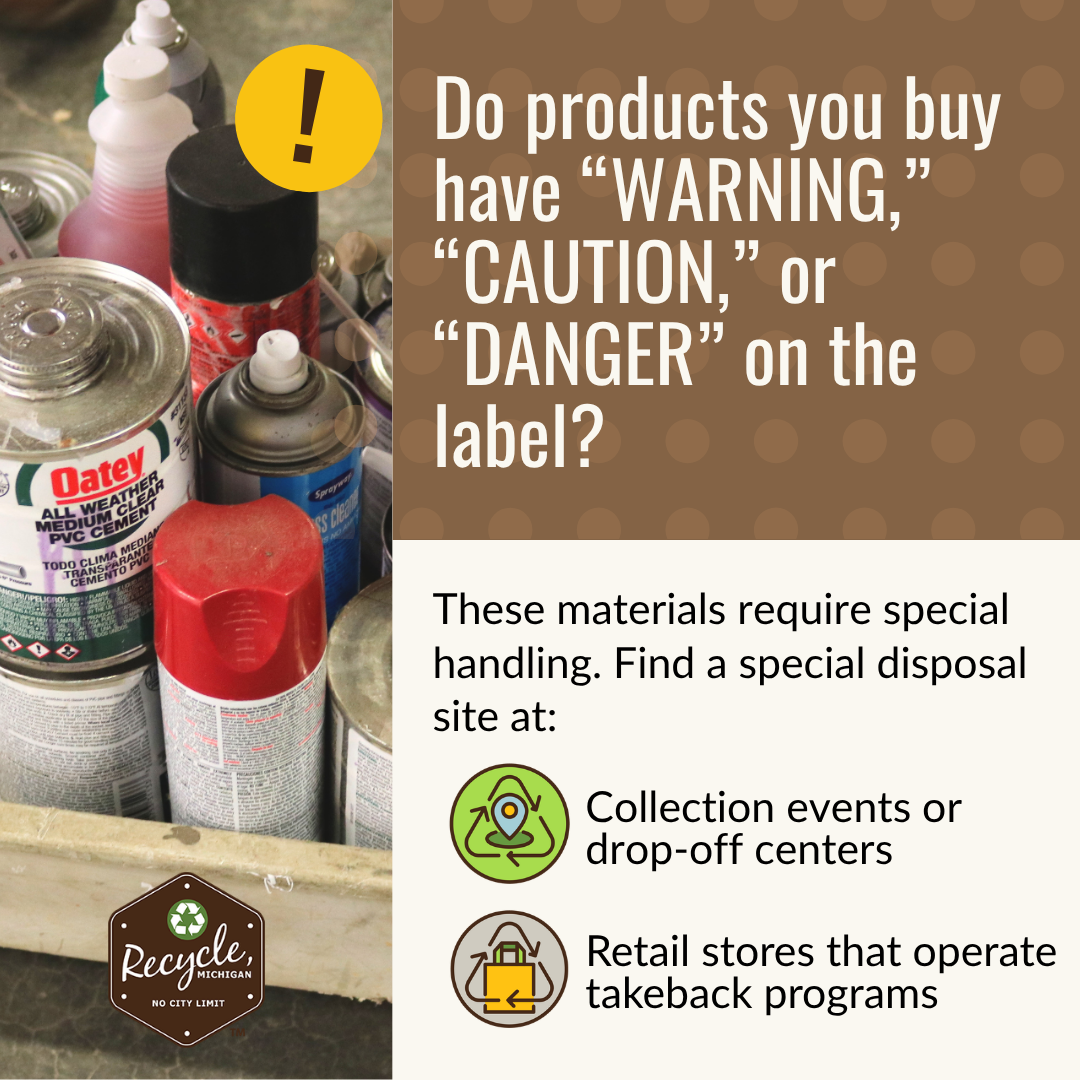
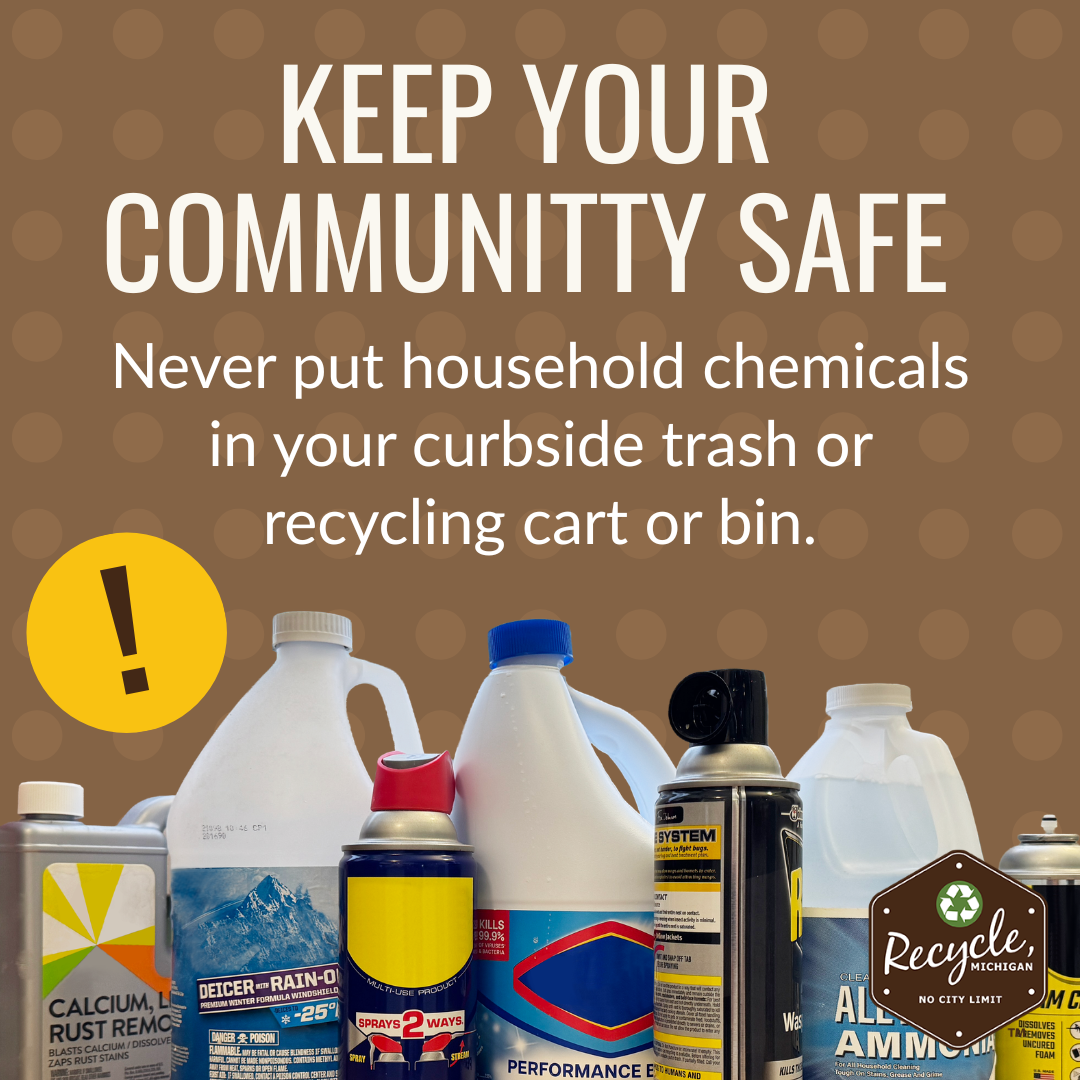
Any product labelled “WARNING,” “CAUTION,” or “DANGER” should not be put in your curbside recycling or trash cart or bin.
Examples include:
Oil-based paints
Cleaning solutions
Automotive fluids like motor oil and antifreeze
Herbicides & pesticides
Other chemicals used in or around the home
Flammable or toxic liquids that are incorrectly included in your recycling can harm people who collect and process our recycling at sorting facilities.
Safely dispose of these items at designated local drop-offs and community held take-back events.
Visit_______________ to learn more about how to recycle household hazardous waste!
When landfilled or poured down the drain, household chemicals like bleach, ammonia, and insecticides can enter waterways and harm our environment.
❌ If a product is labeled “WARNING,” “CAUTION,” or “DANGER” on its packaging, it needs special disposal. Never put these items in your curbside recycling or trash cart or bin.
✅ If you have hazardous materials in your home, always make sure to properly store and label them, so they are used safely and not forgotten.
✅ The most common method to properly dispose these items through local drop-offs and community held take-back events.
Visit_______________ to learn more about how to recycle household hazardous waste!
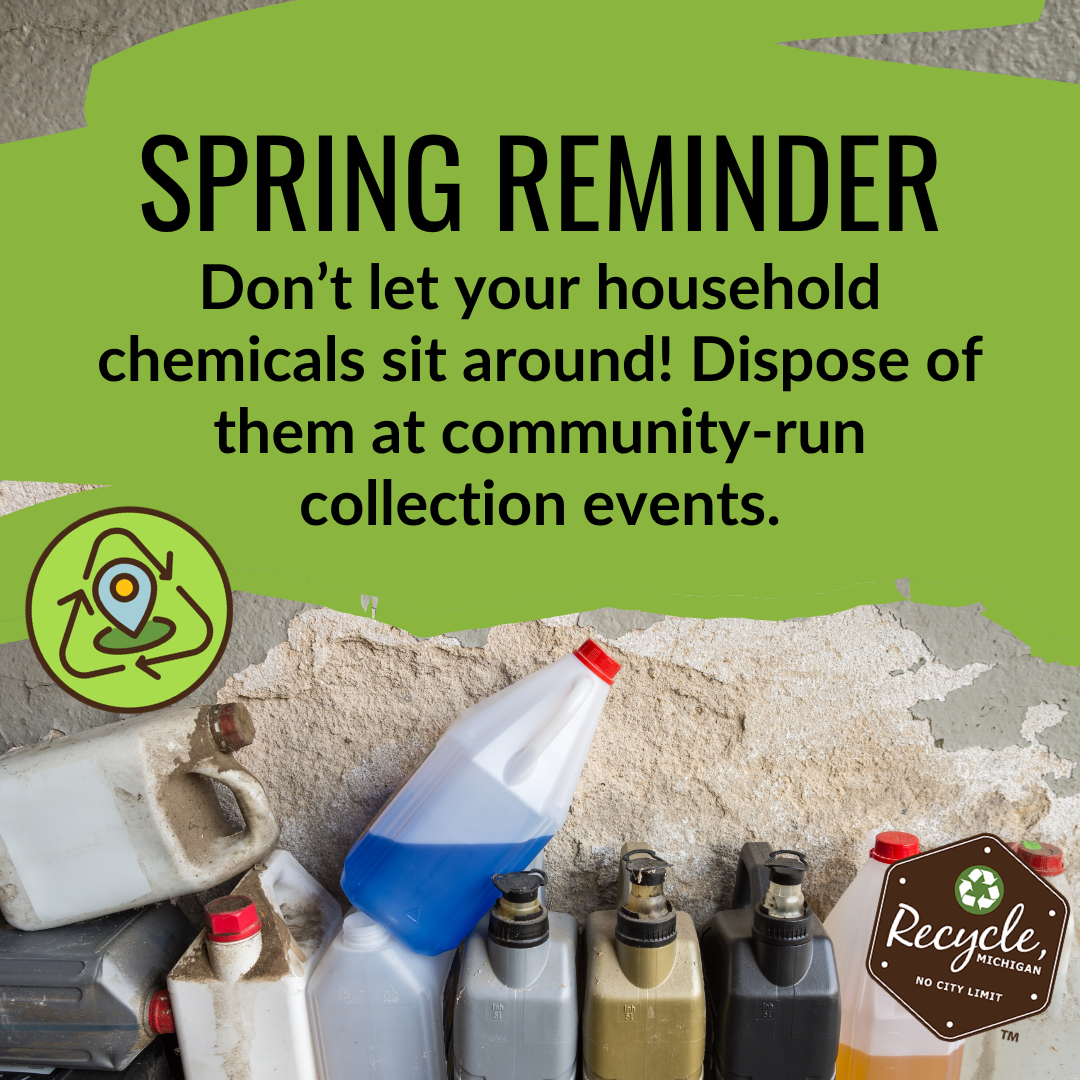
Spring cleaning? Time to drop off old paint, chemicals, and flammable liquids just taking up space!
Check out community-run events where you can drop off hazardous or flammable material that aren’t safe to put in your curbside trash or recycling cart or bin.
Commonly accepted materials include:
☢️ Oil-based paints
☢️ Cleaning solutions
☢️ Automotive fluids like motor oil and antifreeze
☢️ Herbicides & pesticides
☢️ Other chemicals used in or around the home
Visit _______________ to learn more about preparing and dropping off hazardous materials!
PAINT
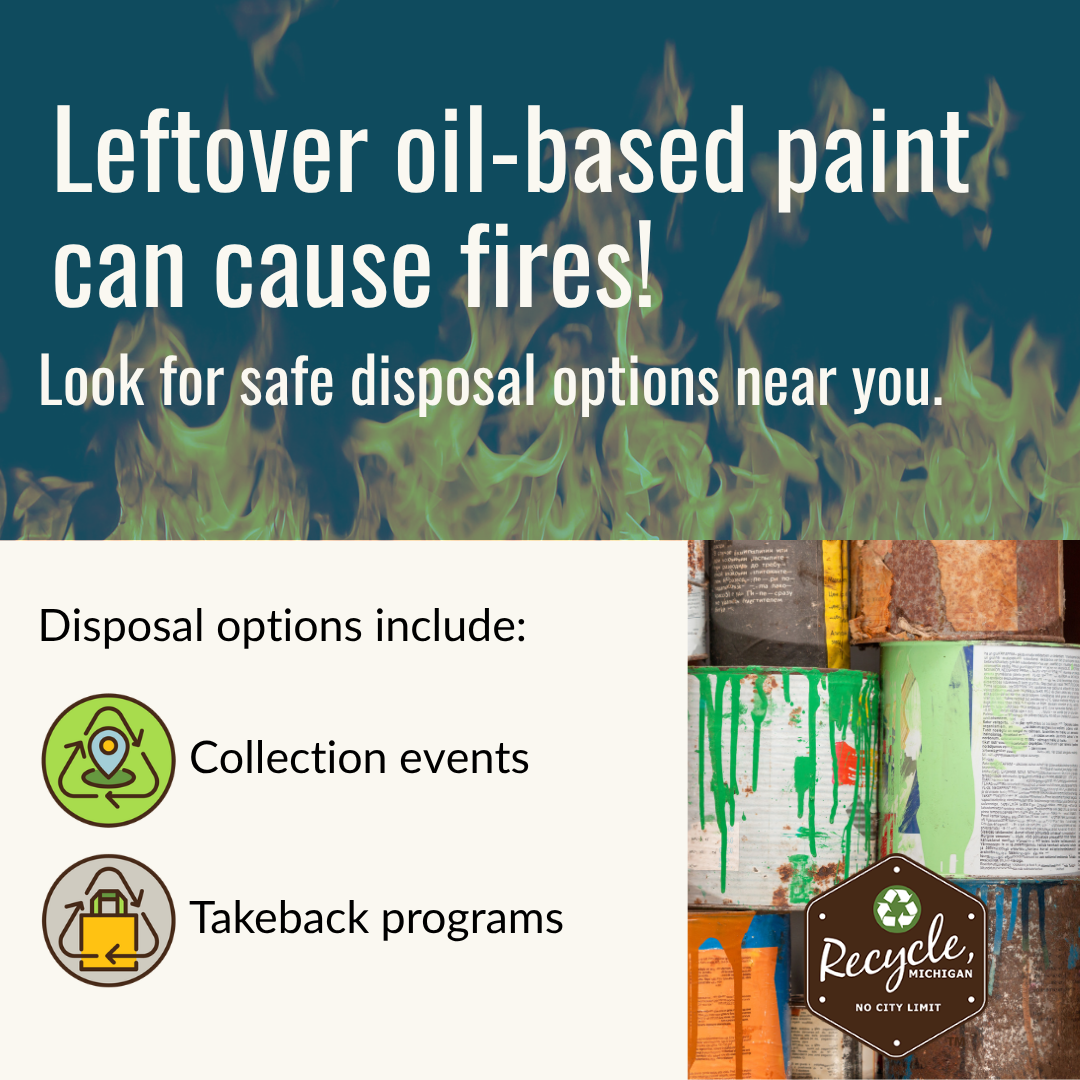
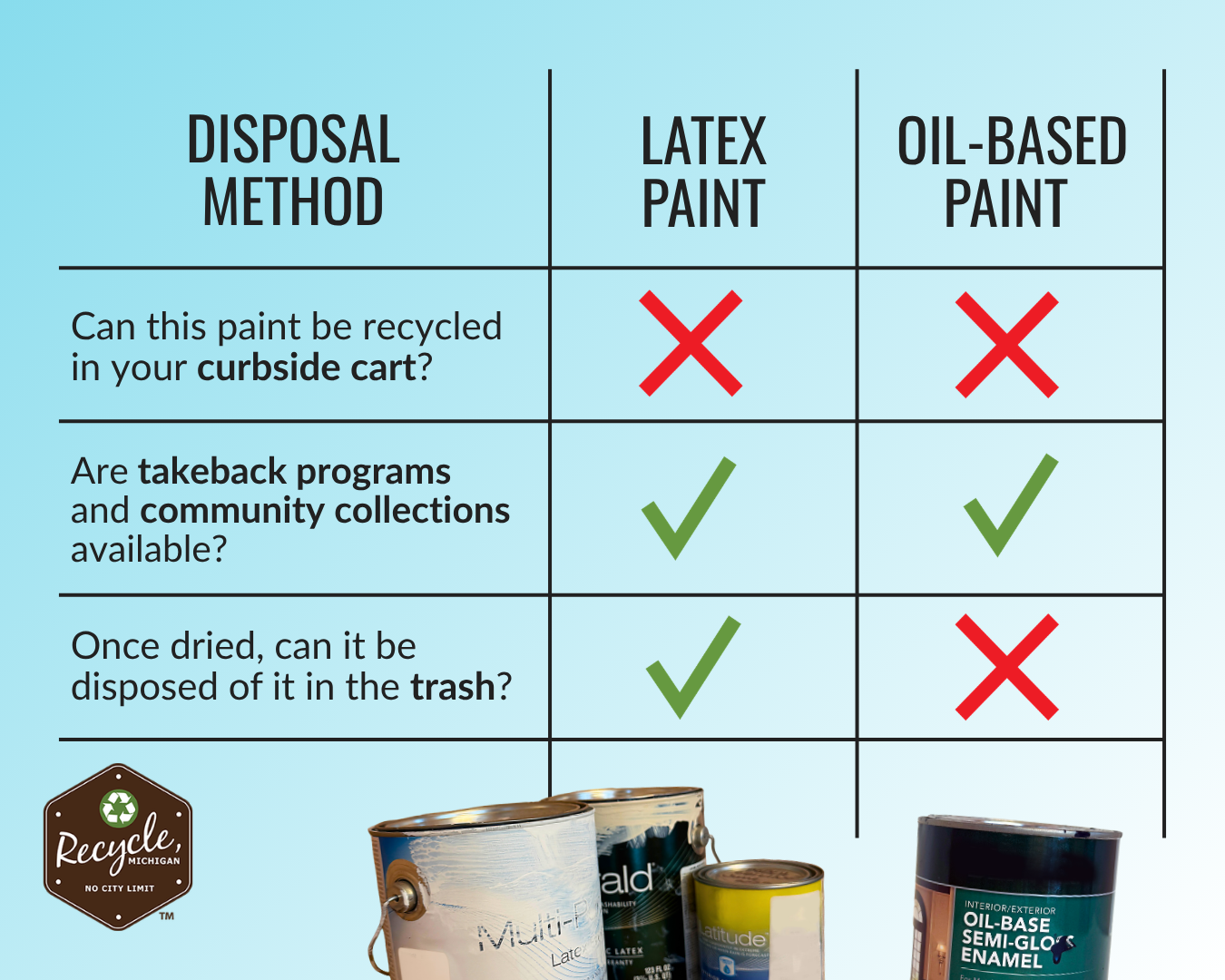
Planning painting projects? Remember to think ahead to reduce wasted paint and money. Calculate the space and how many coats of paint you’ll need. Remember oil-based paint CANNOT be placed in your curbside recycling or trash.
When paint is put in the curbside recycling cart or bin, it can spill and ruin other recyclables.
Never pour liquid oil-based paint down the drain or put it in the trash, as it is toxic to waterways.
Oil-based paint is flammable causing risk of fire and endangers the safety of collection workers and those at the recycling sorting facility.
Visit ______________ to see where you can recycle your paint.
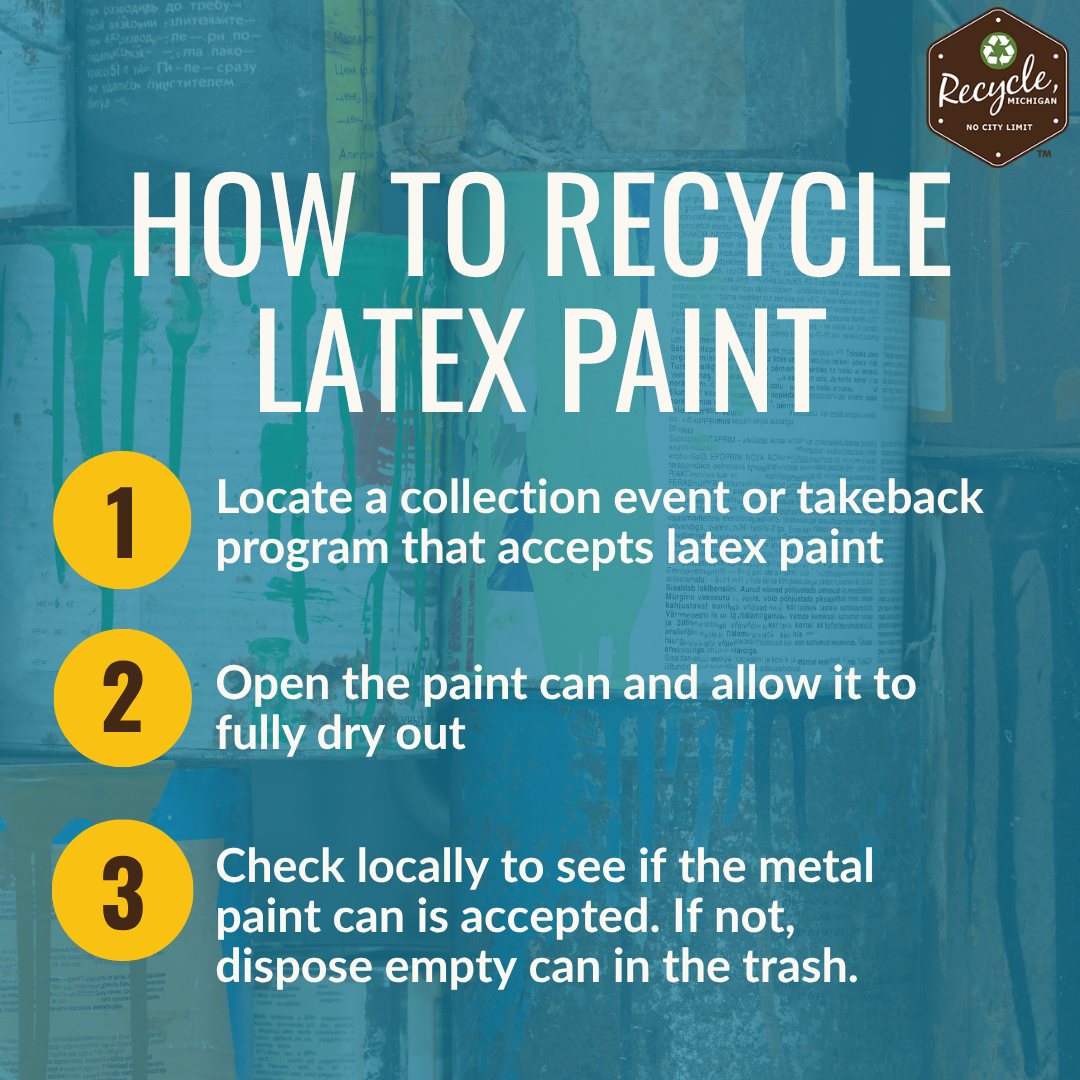
Got leftover paint? Community drop-off events/programs and takeback programs are available for both latex and oil-based paint. Unlike oil paint, (dried) latex paint can be thrown in the trash.
When paint is put in the curbside recycling cart or bin, it can spill and ruin other recyclables. Do not put paint in your recycling cart or bin.
Plan ahead to avoid the hassle of dealing with leftover paint – don’t buy more than what is needed for the square footage of your project.
TIRES
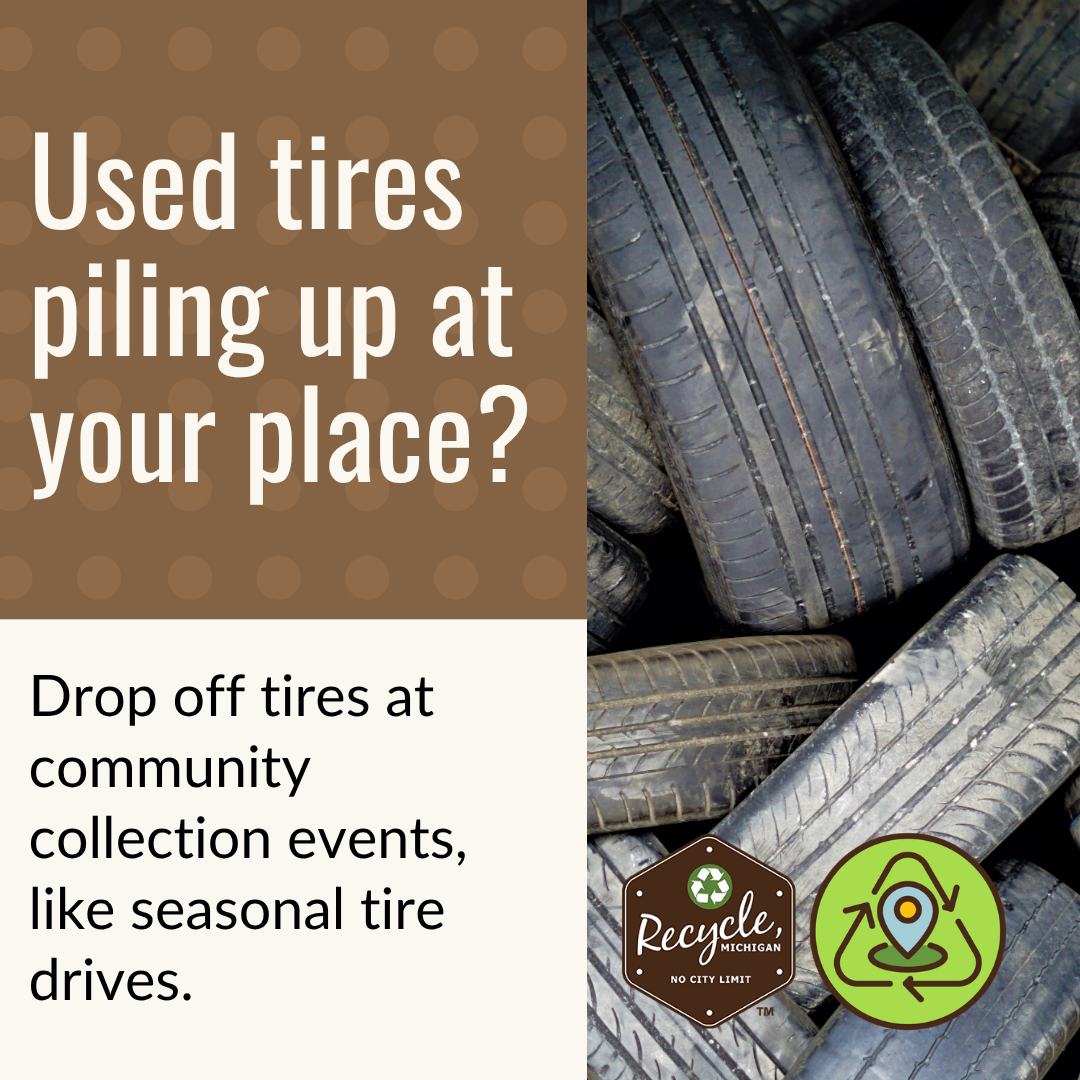
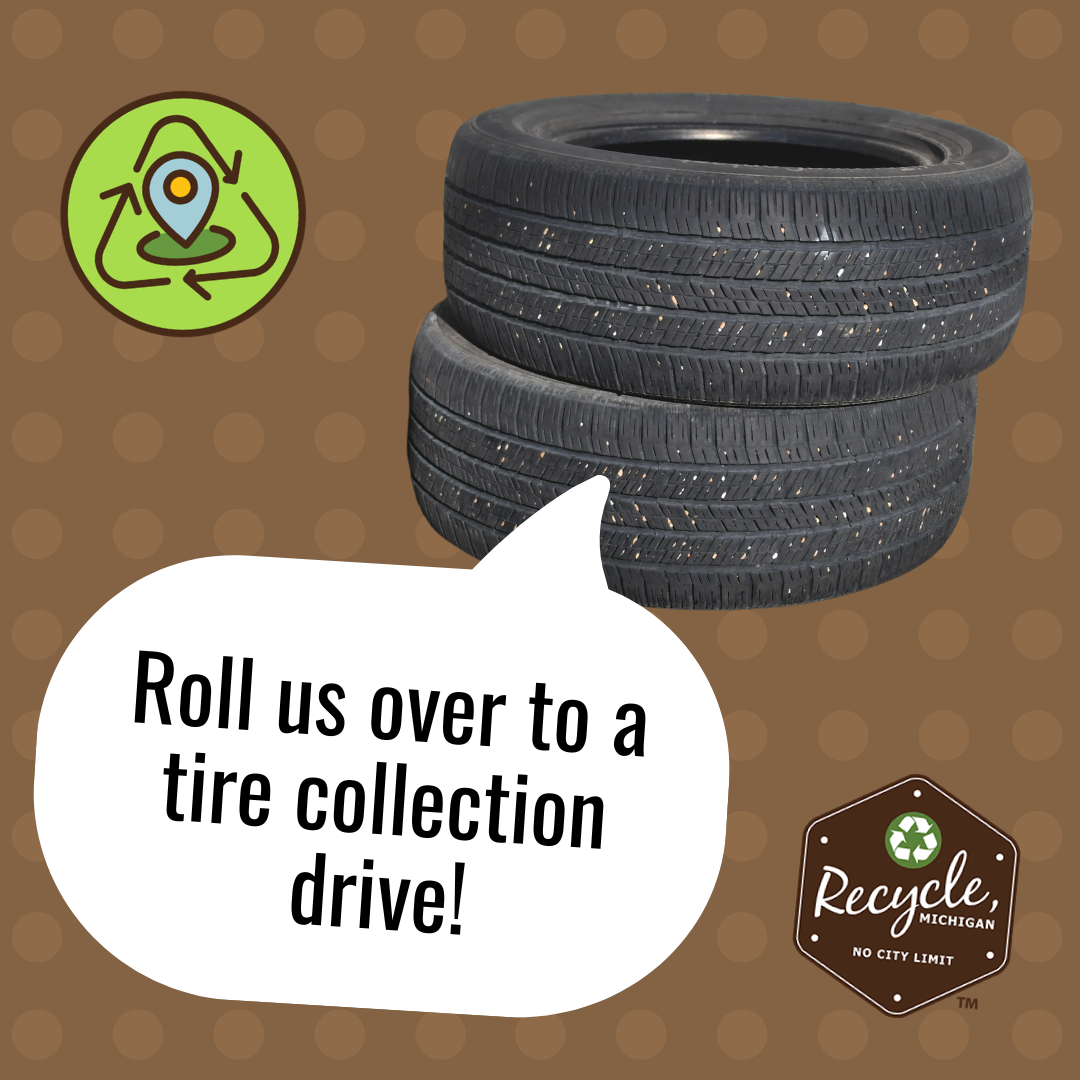
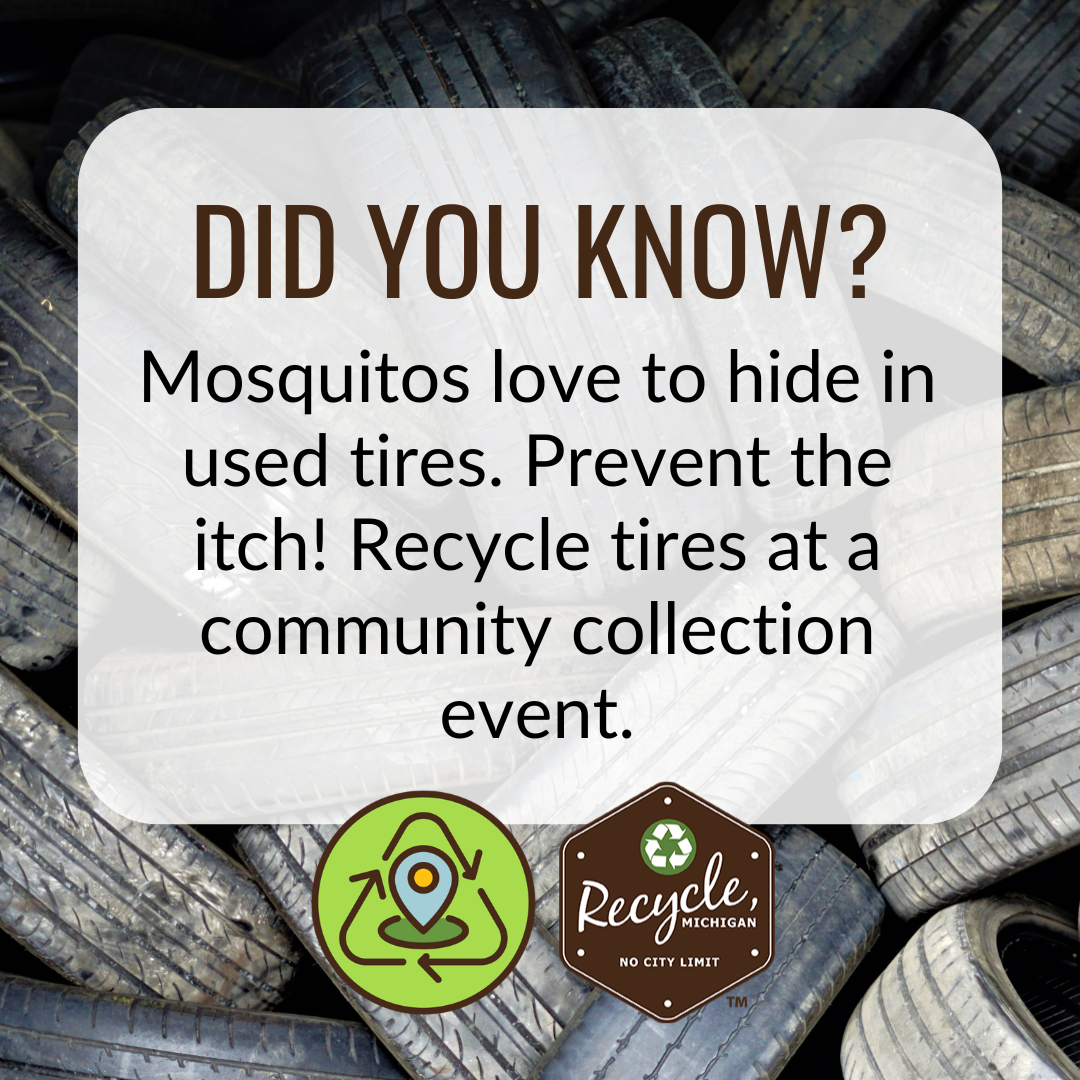
Sick of old tires junking up the place and attracting pests?
Seasonal tire recycling drives are a great way to dispose of used tires. Learn about tire recycling drives happening in your local area to sustainably dispose of your used tires.
❌ Tires cannot be recycled curbside because they require special processing to recover rubber, steel, fiber, and nylon for use in products such as road materials and playground surfacing.
✅ Recycle any used tires at scrap recycling drives in your communit
Tires can be recycled, but only at designated collection events, like scrap tire recycling drives.
❌ Tires require special processing to recover rubber, steel, fiber, and nylon, so they can’t be recycled in your curbside recycling cart or bin.
✅ Tire drives are typically seasonal, taking place in the spring or summer. If you’ve got tires to recycle, take them to a tire drive this year!
TEXTILES
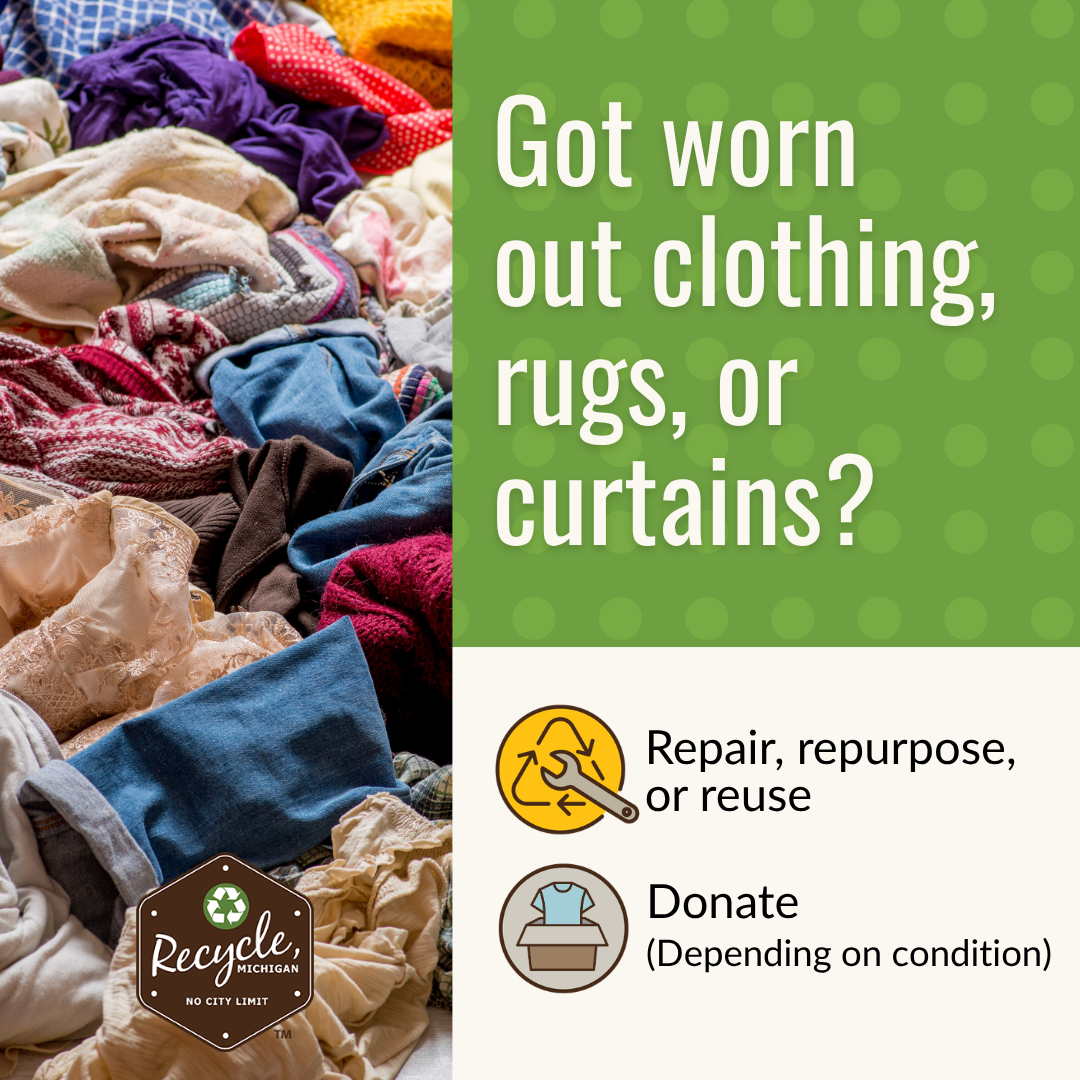
Are you holding onto old clothing, rugs, and curtains?
❌ Fabrics and fibers require specialized sorting and can’t be recycled in your curbside cart or bin.
✅ DONATE: Some donation centers accept clothing in any condition, ripped, stained, worn, etc. Check your local programs rules to see what items they accept.
✅ REPURPOSE: Consider repurposing fabric as cleaning rags or protective storage for breakable items.
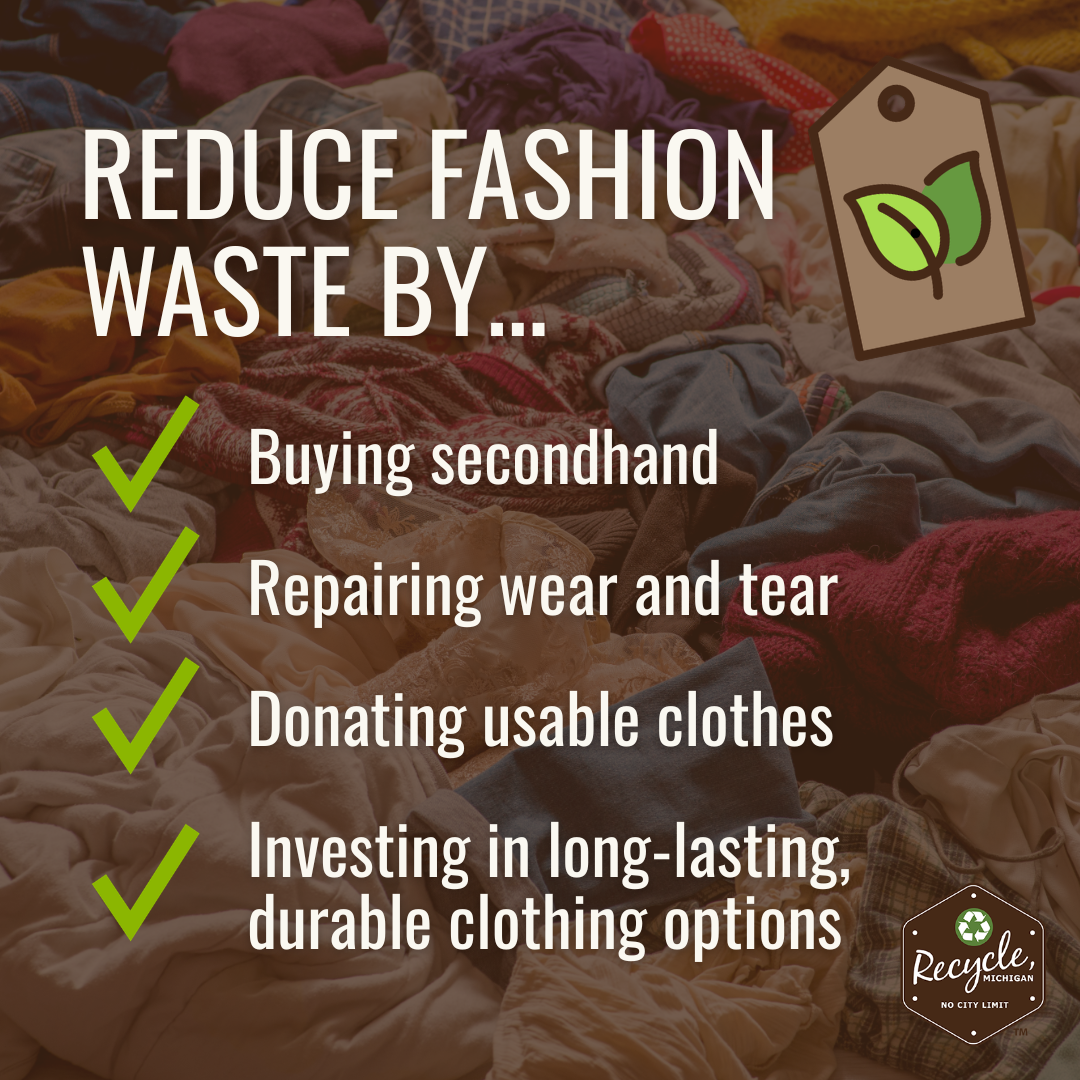
✅ REDUCE: Reduce your textiles waste by choosing sustainable, durable clothing options, repairing tears and wear, or buying secondhand.
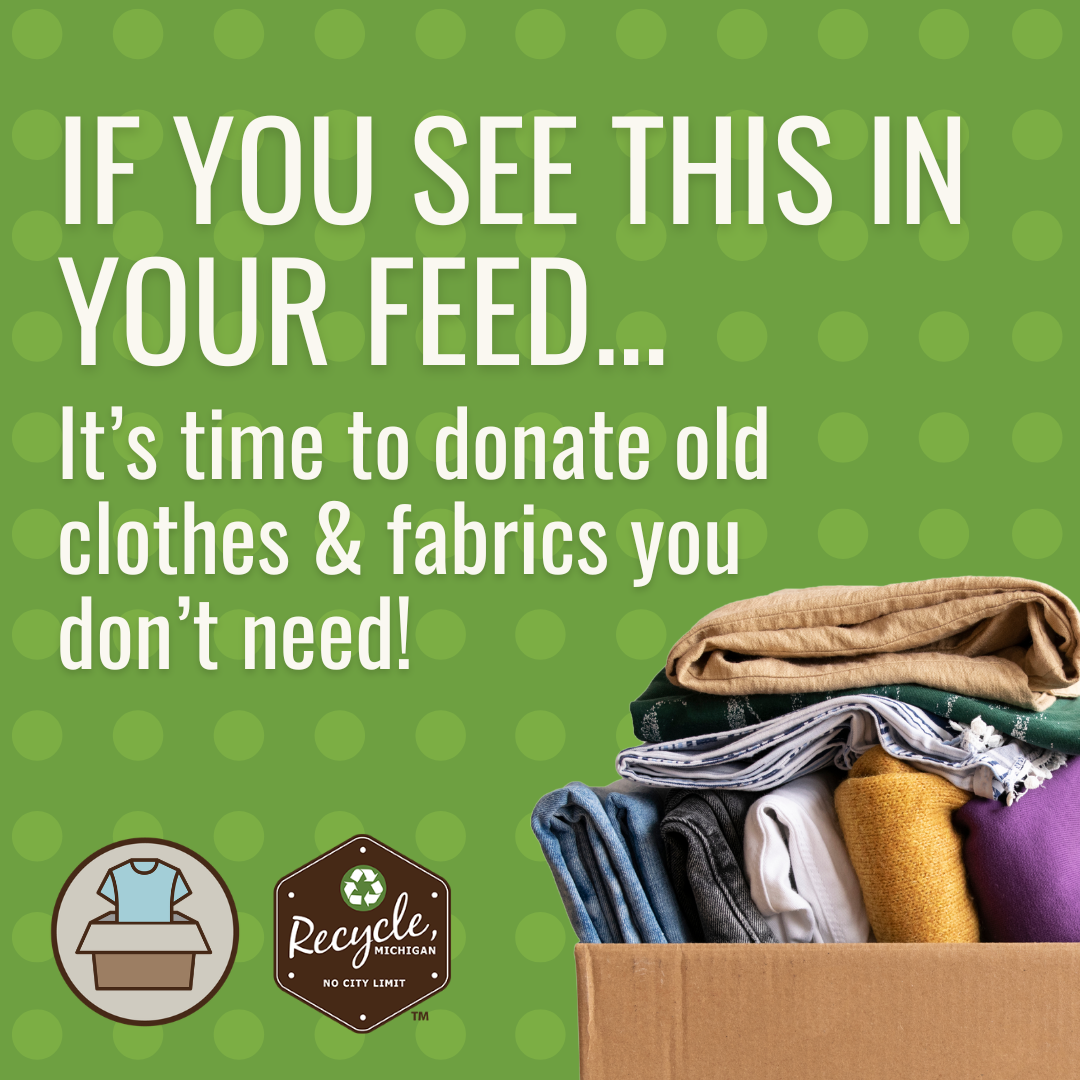
Give clothes and fabric a second life - not a one-way trip to the landfill!
✅ Donate gently used clothing, carpets, and other fabric items to extend their usability and reduce the need to purchase something new.
✅ Plus, donations support communities by boosting local businesses like local thrift shops, nonprofits, and assistance programs.
BATTERIES
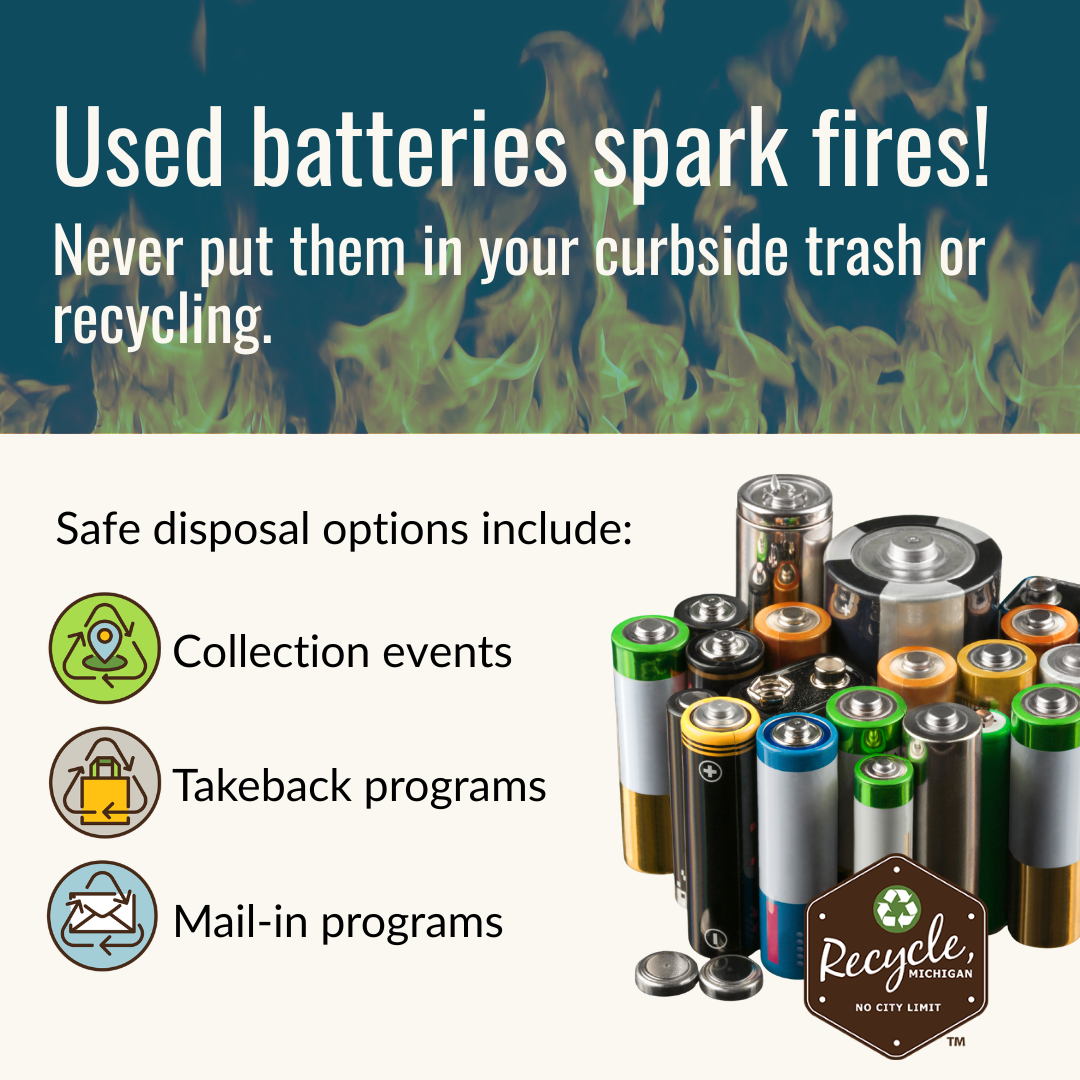
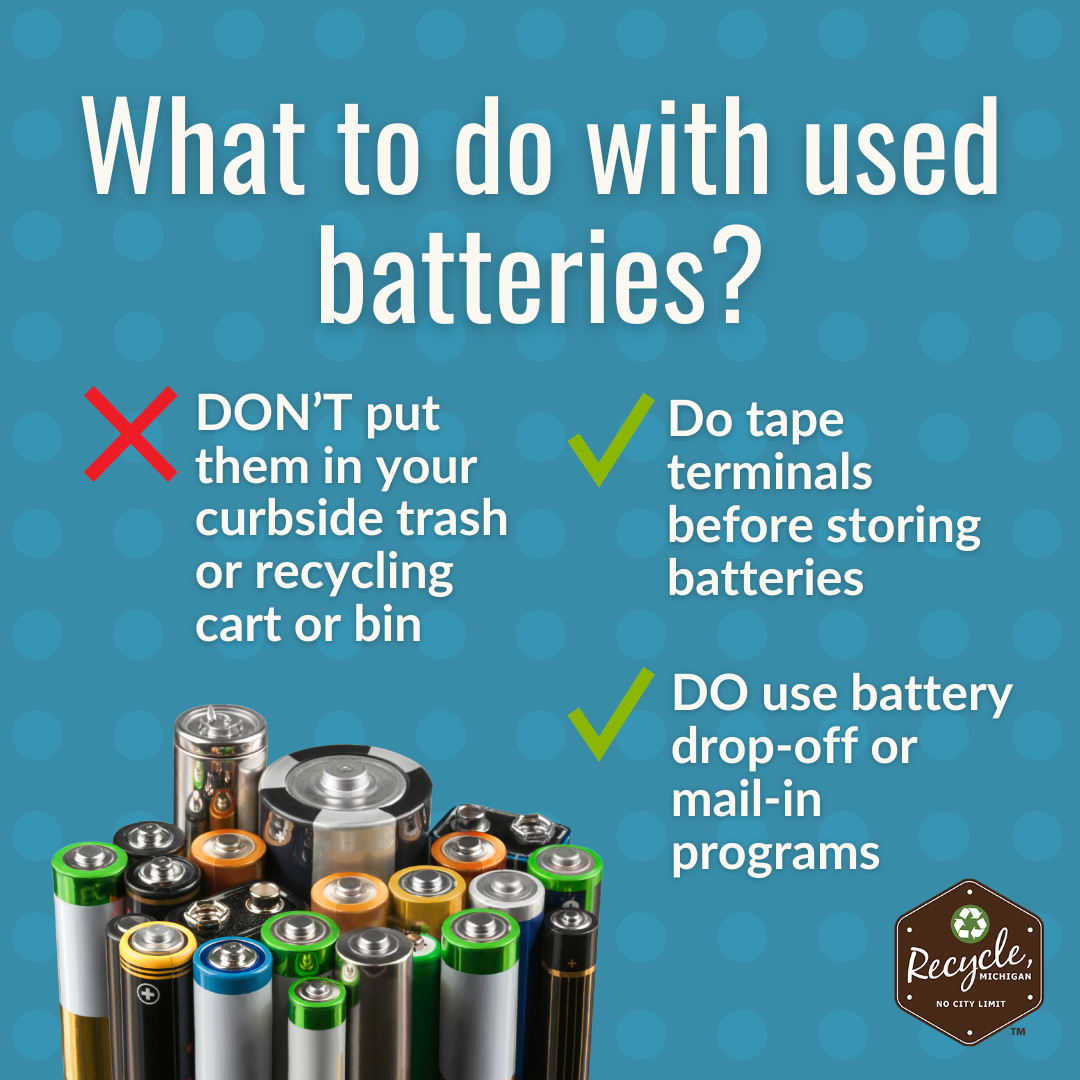
If incorrectly placed in a recycling cart or bin, batteries can easily be crushed and compromised.
Even “dead” batteries can get a “zombie charge” and set recyclables ablaze, causing extensive damage and seriously injuring recycling workers.
Luckily, many communities offer battery collection events, and certain retailers offer takeback programs for batteries and battery-powered products.
Mail-in programs, such as those offered by Cirba Solutions, may also be available to you.
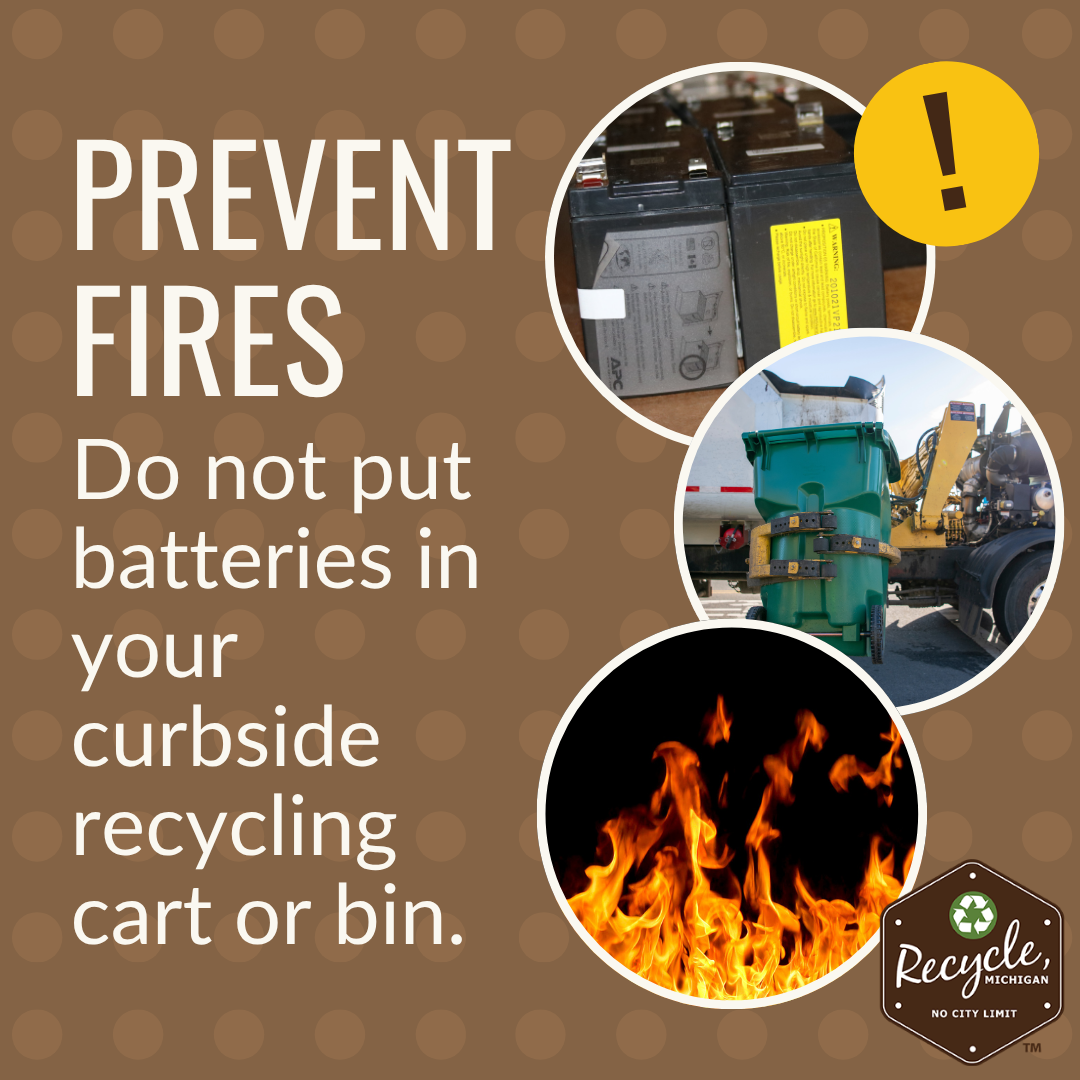
Only YOU can prevent battery recycling fires! Do not put batteries in your curbside recycling cart or bin!
Rechargeable batteries are especially reactive, and can be found in everyday household products like cell phones, tools, and even musical cards. If a battery is compacted alongside highly flammable recyclables like paper, it can explode and cause a major fire.
To safely dispose of rechargeable batteries, look into:
✅Community drop-off events
✅Retail takeback programs
✅Mail-in programs (such as those offered by Cirba Solutions)
Batteries are dangerous if not properly stored and recycled – they contain chemicals that can pose a risk to people and the environment.
Even dead batteries can cause a spark when thrown away. To prevent a spark, tape the ends of your batteries before transporting them to a designated drop-off site. Mail-in programs, such as those offered by Cirba Solutions, may also be available to you.
PLASTIC BAGS & FILM
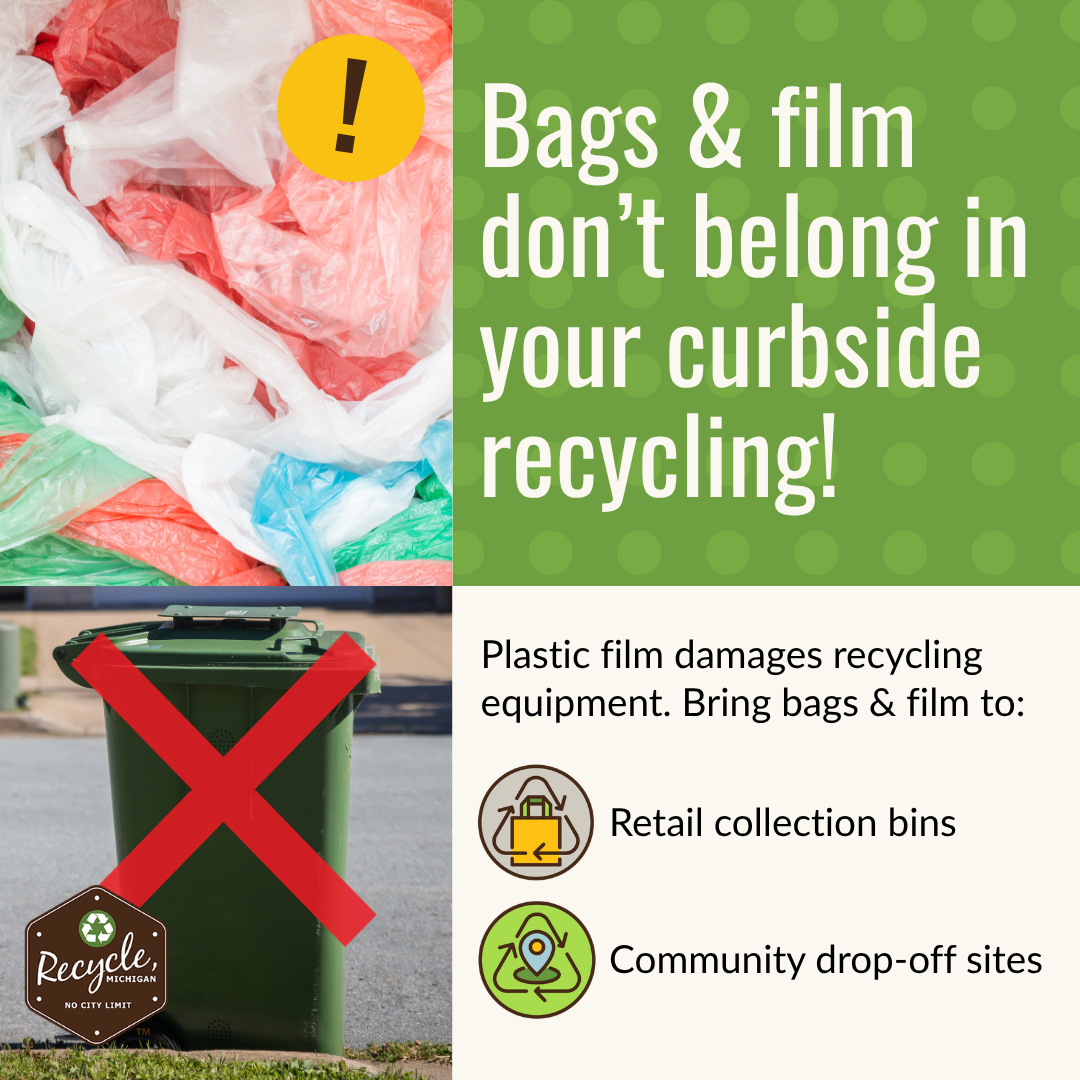
Keep recycling functional–don’t put plastic bags, wrap, or other types of film in your curbside cart or bin!
❌ At recycling facilities, common household items like plastic grocery bags, bread bags, cling wrap, and produce bags tangle up in the recycling equipment and cause extensive damage.
✅ Luckily, many retail stores operate bins to collect and recycle certain types of plastic film–make sure to check which types are accepted.
✅ Plus, some communities in Michigan host drop-off collection sites or events for plastic bags and film.
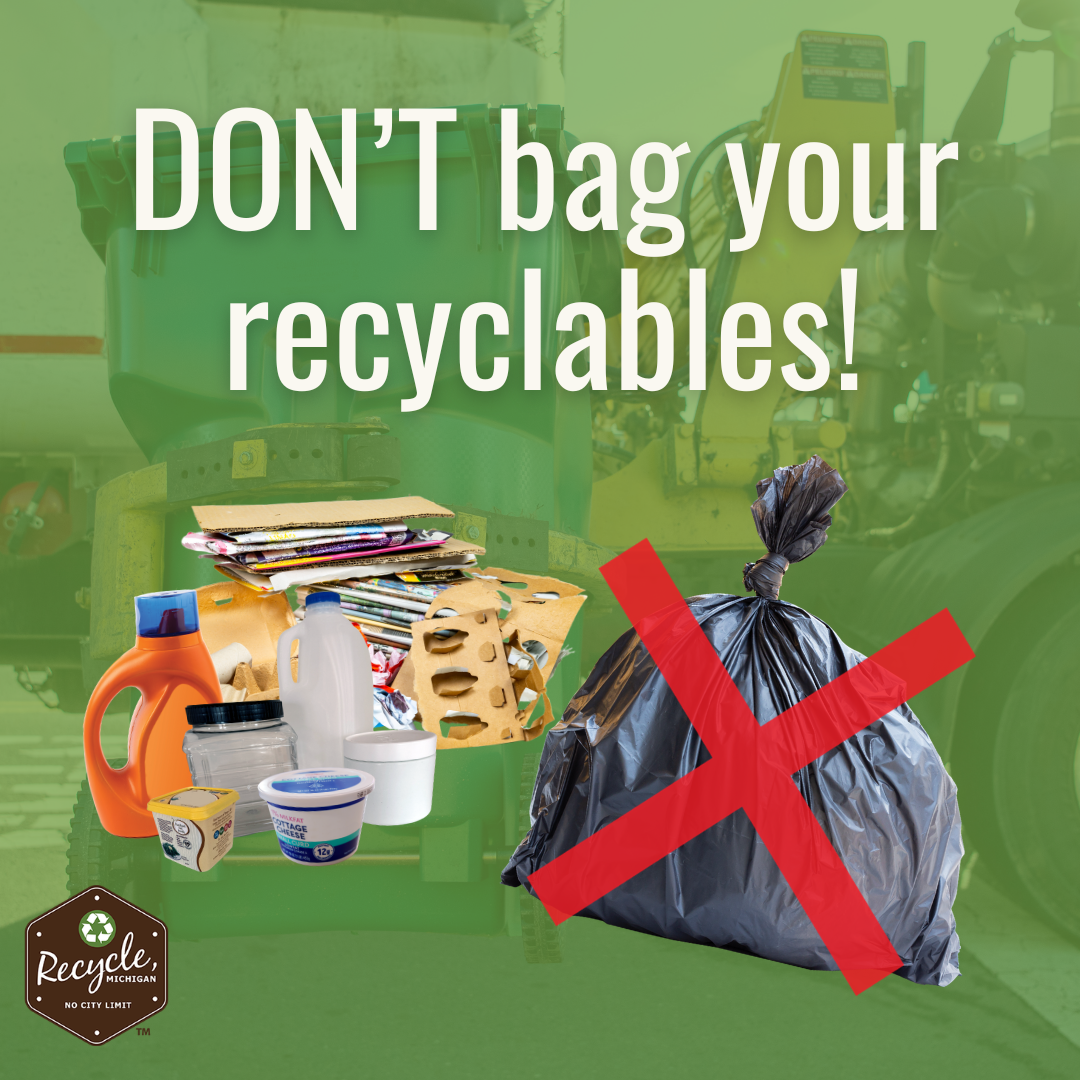
Recyclables should be left loose (unbagged) in your recycling cart or bin.
All recyclable materials contained within a plastic bag will likely be landfilled at the recycling center because of the risk involved in not knowing what’s in the bag.
Plus, bags tangle up in the recycling equipment and cause extensive damage.
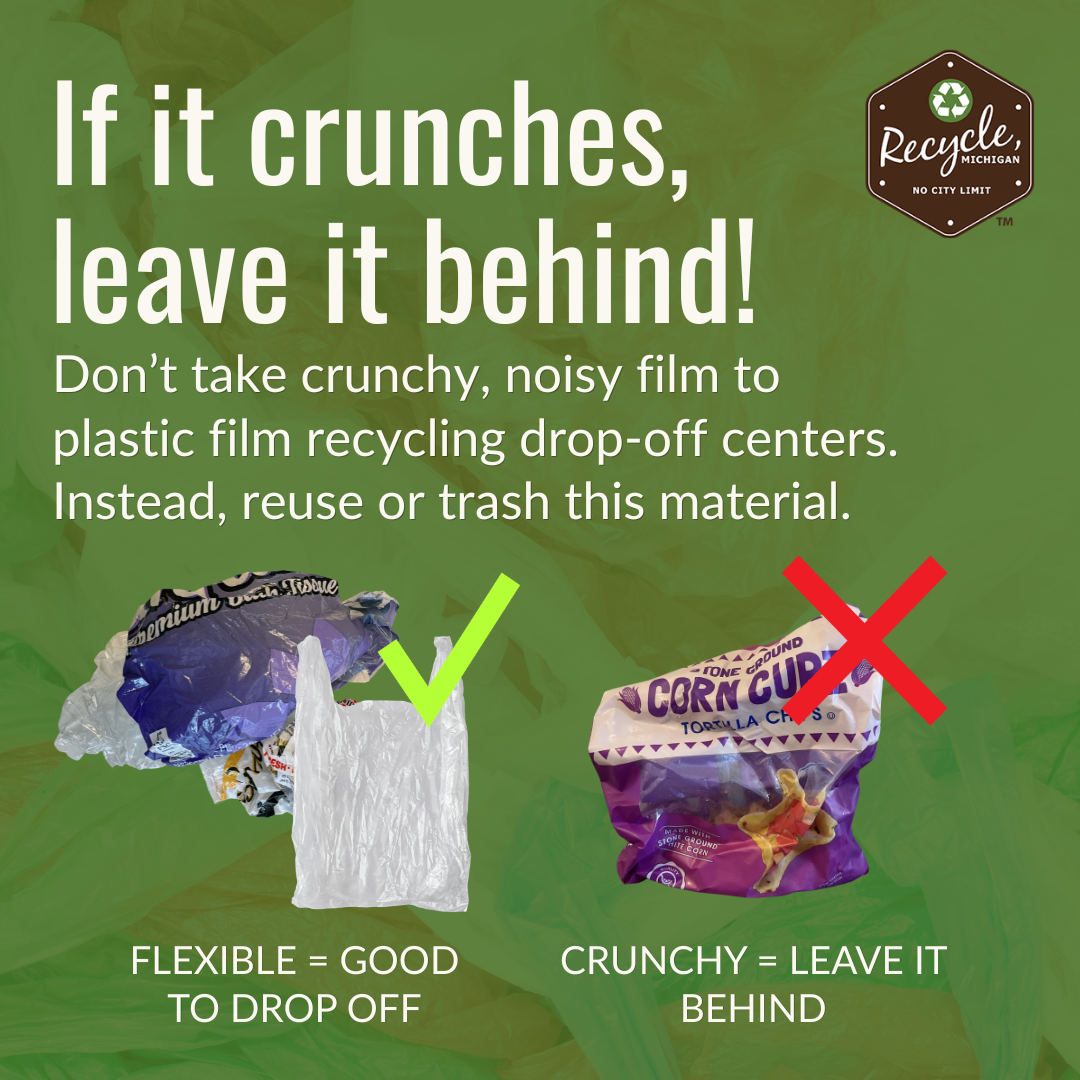
Stretchy plastic things like plastic bags for shopping, bread/produce bags or packaging wrap can be recycled at designated bag drop-off locations or collection events.
Drop-off programs for plastic film don’t accept non-stretchy, crinkly film like chip bags or cellophane.
❌ Regardless of the type, never put plastic film in your curbside recycling cart or bin.
✅ Plastic bags and stretchy wrap are accepted at retail stores or community sites with plastic film collection bins.
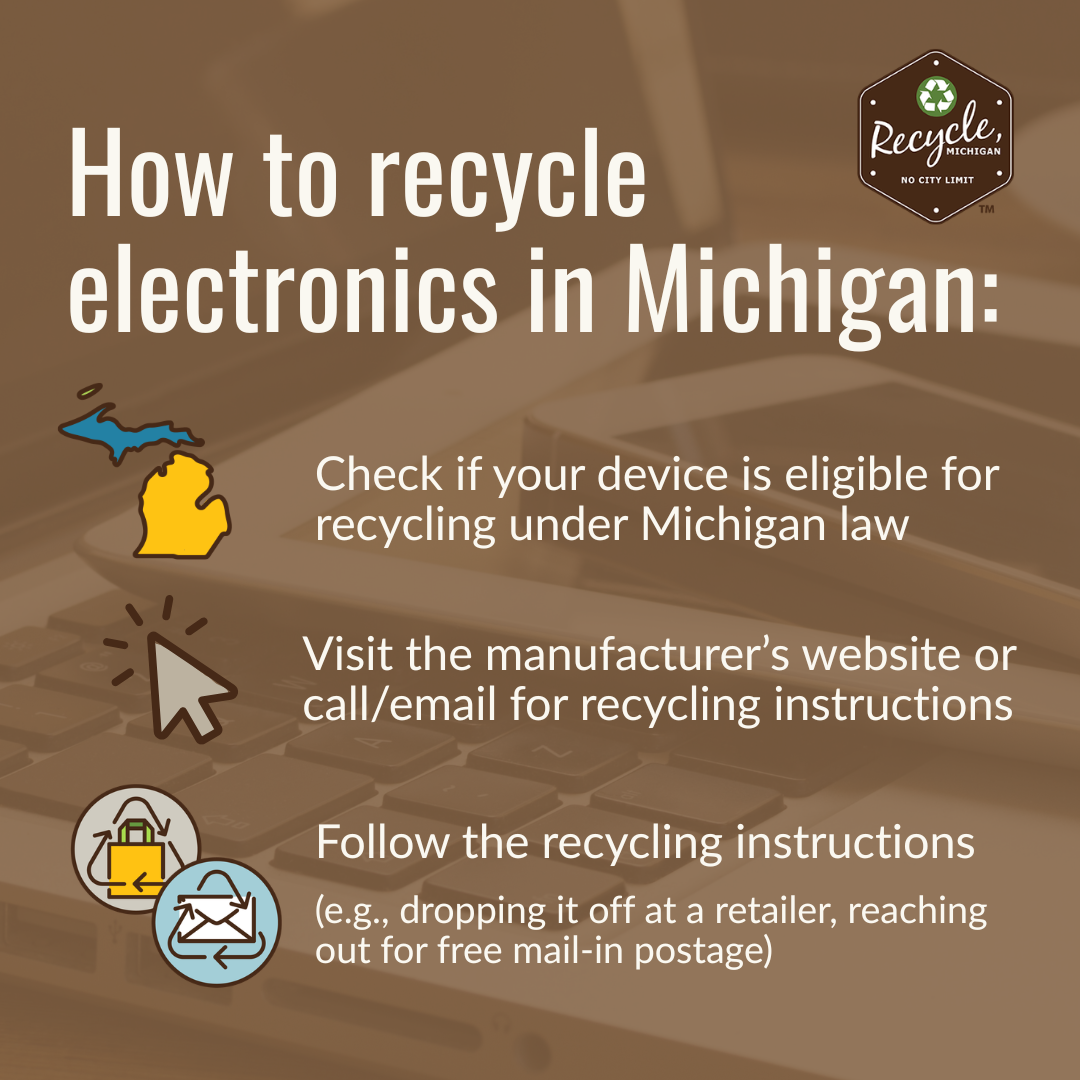
ELECTRONICS
If incorrectly placed in a recycling cart or bin, batteries can easily be crushed and compromised.
Even “dead” batteries can get a “zombie charge” and set recyclables ablaze, causing extensive damage and seriously injuring recycling workers.
Luckily, many communities offer battery collection events, and certain retailers offer takeback programs for batteries and battery-powered products.
Mail-in programs, such as those offered by Cirba Solutions, may also be available to you.
Only YOU can prevent battery recycling fires! Do not put batteries in your curbside recycling cart or bin!
Rechargeable batteries are especially reactive, and can be found in everyday household products like cell phones, tools, and even musical cards. If a battery is compacted alongside highly flammable recyclables like paper, it can explode and cause a major fire.
To safely dispose of rechargeable batteries, look into:
✅Community drop-off events
✅Retail takeback programs
✅Mail-in programs (such as those offered by Cirba Solutions)
Batteries are dangerous if not properly stored and recycled – they contain chemicals that can pose a risk to people and the environment.
Even dead batteries can cause a spark when thrown away. To prevent a spark, tape the ends of your batteries before transporting them to a designated drop-off site. Mail-in programs, such as those offered by Cirba Solutions, may also be available to you.